Tanzania 1,200 t/d Gold Ore Processing Plant Project
Project Overview
The Tanzania 1,200 t/d Gold Ore Processing Plant Project is designed to treat both oxide and sulfide gold ores, with significant differences in feed grade but good response to whole-ore cyanide leaching.
Metallurgical testwork was carried out to evaluate the gold recovery characteristics of the two ore types and determine a technically suitable processing route.
The test results showed:
Oxide Ore: approximately 2.4 g/t Au, achieving a 93.75% gold leaching recovery through whole-ore cyanidation.
Sulfide Ore: approximately 10.7 g/t Au, achieving a 91.58% gold leaching recovery through whole-ore cyanidation.
Based on the testwork results and the required plant capacity of 1,200 tonnes per day, Haoyang developed an integrated processing solution covering crushing, grinding and classification, whole-ore cyanide leaching, activated carbon adsorption, desorption and electrowinning, gold smelting, and tailings dewatering for dry stacking.
The process is designed to provide stable feed preparation, efficient gold dissolution and recovery, and practical management of process tailings.
Project Information
Item | Project Details |
Project Location | Tanzania |
Processing Capacity | 1,200 t/d |
Ore Types | Oxide Gold Ore & Sulfide Gold Ore |
Oxide Ore Grade | 2.4 g/t Au |
Oxide Ore Leaching Recovery | 93.75% |
Sulfide Ore Grade | 10.7 g/t Au |
Sulfide Ore Leaching Recovery | 91.58% |
Crushing Process | Single-Stage Open Circuit |
Grinding Process | Single-Stage Closed Circuit |
Classification Equipment | Hydrocyclones |
Gold Extraction Process | Whole-Ore Cyanidation |
Gold Recovery | Carbon Adsorption + Desorption & Electrowinning |
Final Gold Treatment | Smelting |
Tailings Treatment | Thickening + Dewatering + Dry Stacking |
Haoyang Process Solution
Process Selection Based on Metallurgical Testwork
An effective gold processing plant should be designed around the actual characteristics of the ore rather than simply applying a standard flowsheet.
For this project, the feed contains both oxide and sulfide gold ores, so metallurgical testwork was used to evaluate their response to cyanide leaching.
The results demonstrated that both ore types were suitable for the selected whole-ore cyanidation route, achieving leaching recoveries above 90% under the tested conditions.
Based on these results, Haoyang selected the following overall process:
Crushing → Grinding & Classification → Whole-Ore Cyanide Leaching → Activated Carbon Adsorption → Desorption & Electrowinning → Gold Smelting → Tailings Thickening & Dewatering → Dry Stacking
This integrated flowsheet connects ore preparation, gold extraction, final gold recovery, and tailings treatment into one continuous processing system.
Single-Stage Open-Circuit Crushing
Run-of-mine ore first enters the crushing section, where a single-stage open-circuit crushing process is used.
The main purpose of this stage is to reduce the feed to a suitable particle size for efficient grinding.
Unlike more complex multi-stage crushing circuits, the single-stage configuration provides a relatively straightforward material flow and can reduce the number of crushing and screening units required where the ore characteristics and target feed size permit.
The crushed material is then transferred to the grinding section for further size reduction and mineral liberation.
Closed-Circuit Grinding & Hydrocyclone Classification
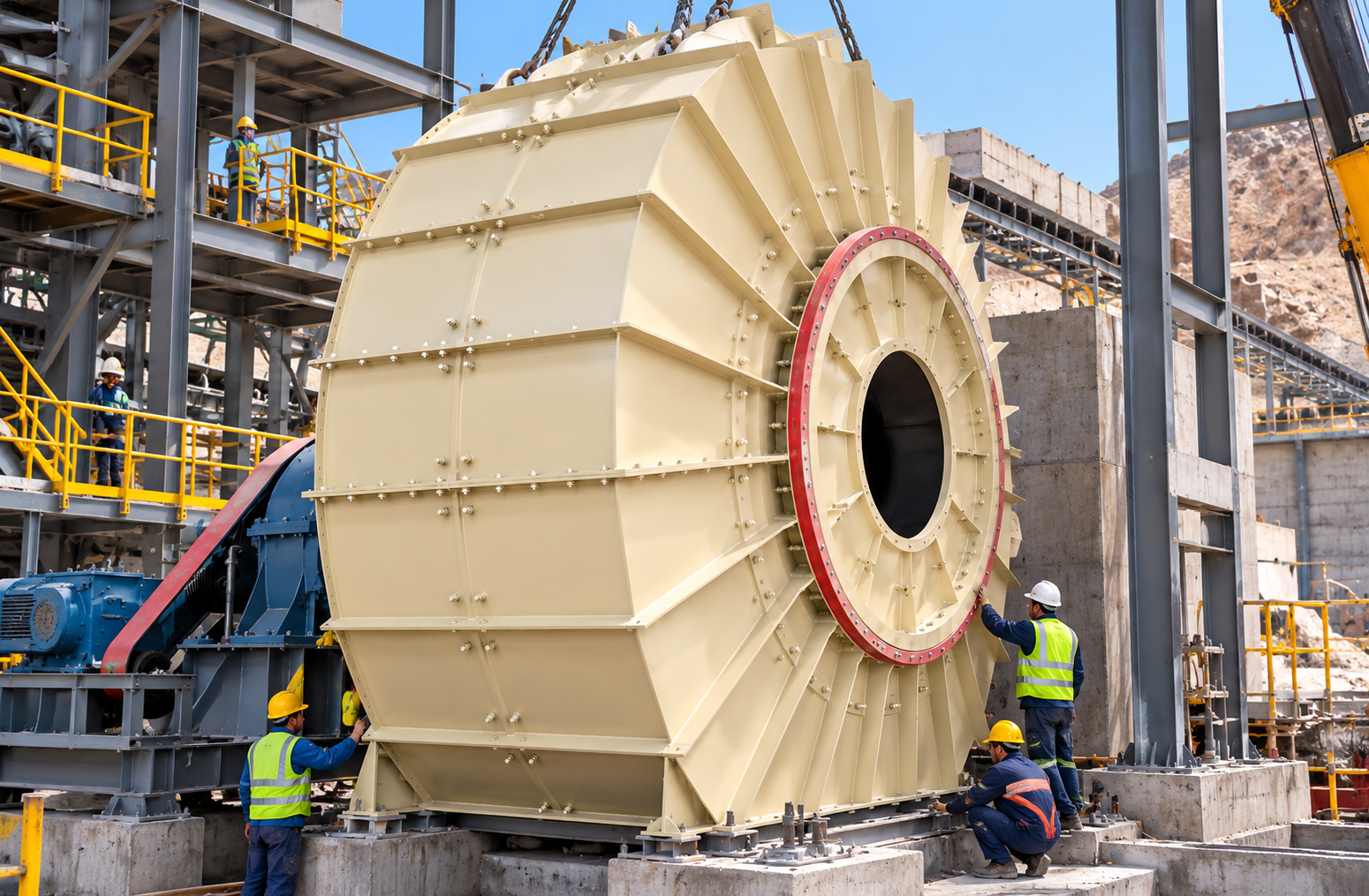
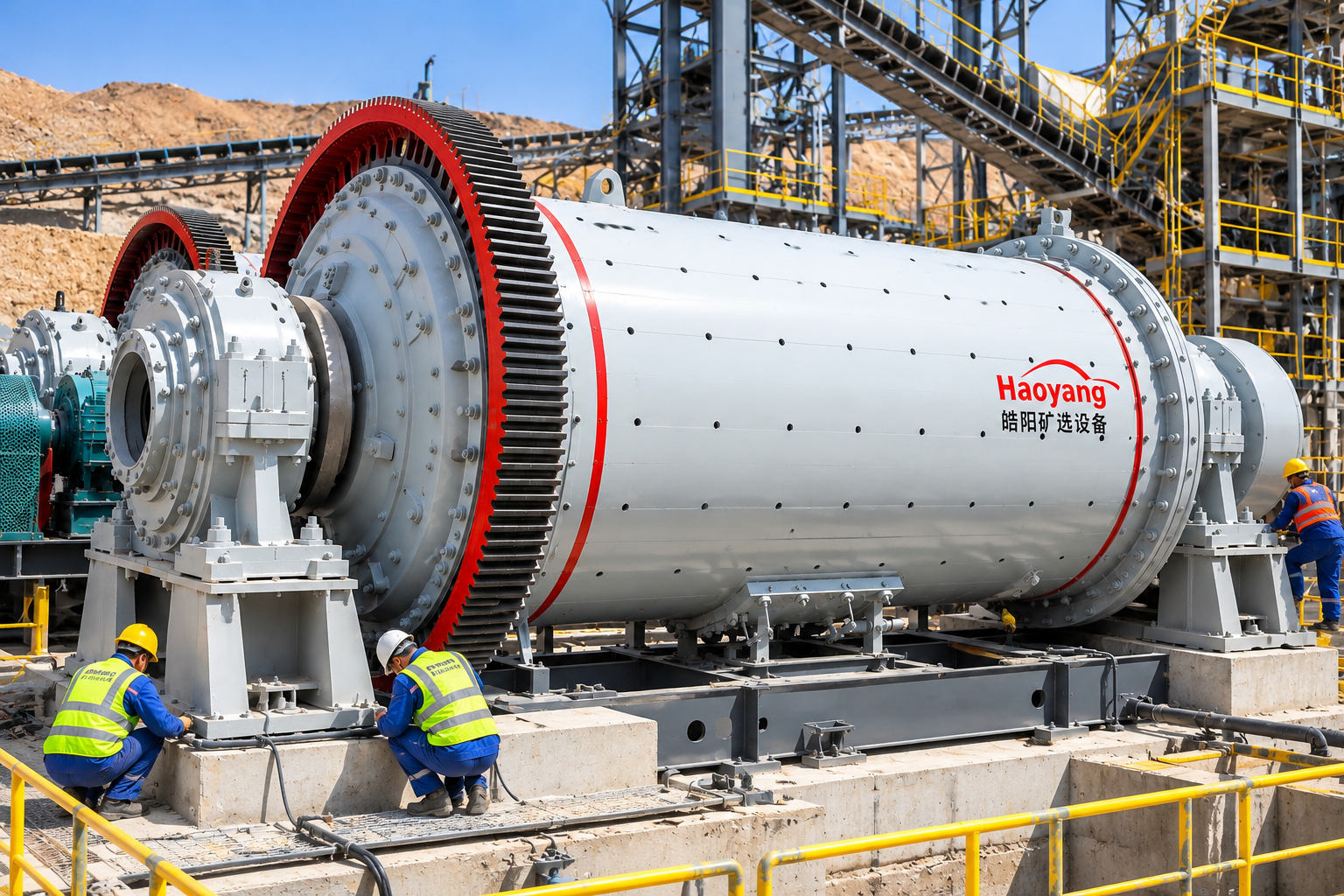
After crushing, the ore enters a single-stage closed-circuit grinding system.
Grinding is essential because gold-bearing minerals must be sufficiently liberated before cyanide can effectively contact and dissolve the recoverable gold.
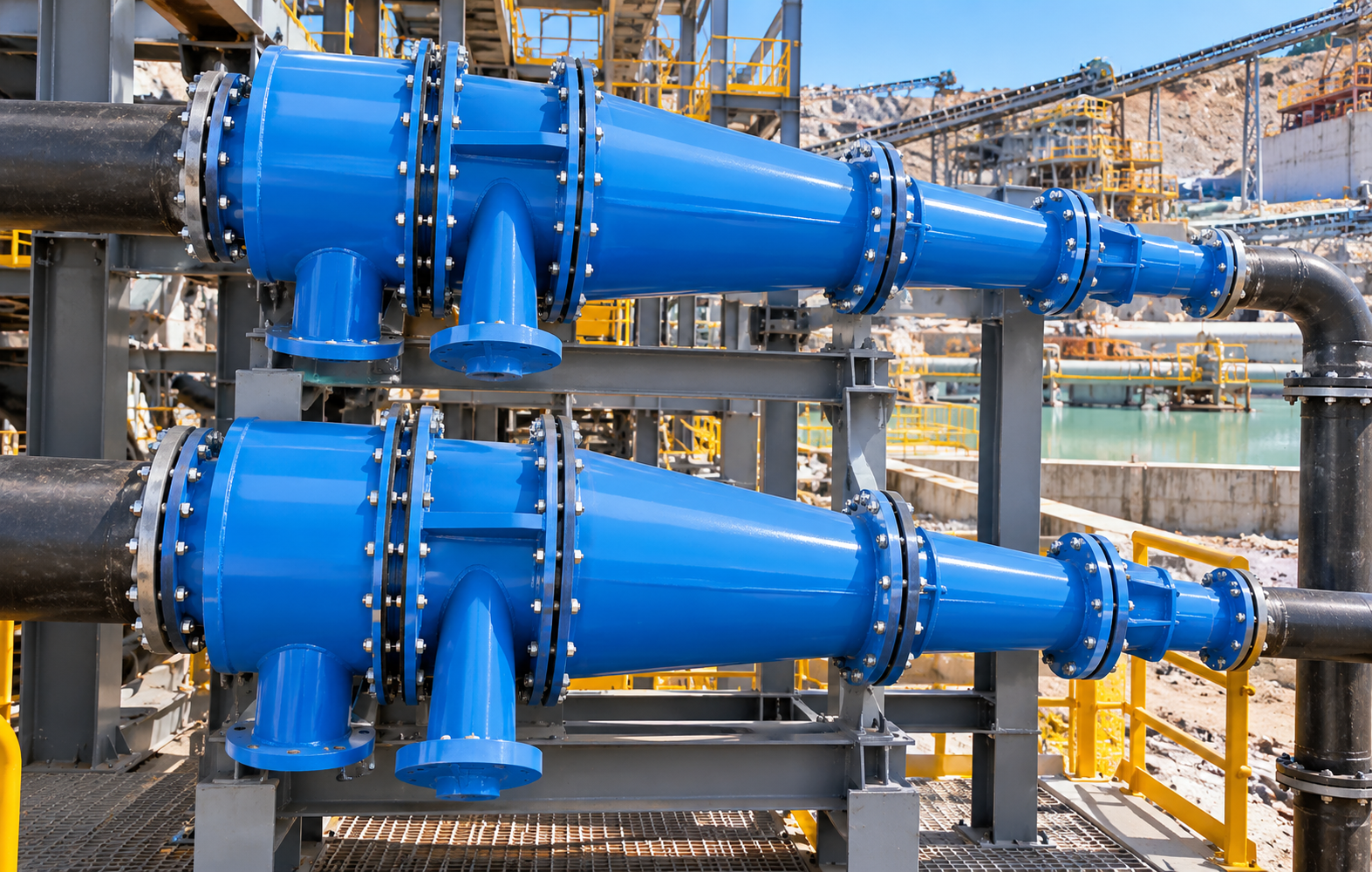
The mill discharge is classified using hydrocyclones.
The classification circuit separates the slurry according to particle size:
Coarse Hydrocyclone Underflow → Returned to the Mill for Regrinding
Qualified Hydrocyclone Overflow → Sent to the Gold Extraction Circuit
This closed-circuit configuration prevents excessively coarse material from entering the leaching section and helps maintain a more consistent particle-size distribution.
Stable grinding and classification conditions are particularly important for downstream cyanidation because particle size directly influences mineral liberation, slurry behavior, and gold leaching performance.
Whole-Ore Cyanide Leaching
After reaching the required grinding fineness, the classified slurry enters the whole-ore cyanide leaching circuit.
Under controlled alkaline conditions, cyanide solution contacts the finely ground gold-bearing material. Recoverable gold is dissolved into the solution in the form of soluble gold-cyanide complexes.
The leaching circuit is designed to provide suitable conditions for:
Slurry Agitation • Reagent Contact • Aeration • pH Control • Retention Time • Gold Dissolution
The actual operating parameters are determined according to metallurgical testwork and adjusted during plant operation according to changes in feed characteristics.
For this project, testwork demonstrated favorable cyanidation performance for both major ore types:
Oxide Ore — 93.75% Gold Leaching Recovery
Sulfide Ore — 91.58% Gold Leaching Recovery
These results provided the technical basis for selecting whole-ore cyanidation as the principal gold extraction process.
Activated Carbon Adsorption
Once gold has dissolved into the cyanide solution, activated carbon is used to capture the dissolved gold.
The porous structure and adsorption properties of activated carbon allow gold-cyanide complexes to be transferred from the solution onto the carbon surface.
The recovery route can be summarized as:
Gold-Bearing Slurry → Cyanide Leaching → Dissolved Gold → Activated Carbon Adsorption → Gold-Loaded Carbon
As adsorption continues, the carbon becomes progressively loaded with gold and is subsequently separated from the process circuit for downstream treatment.
This provides the connection between the hydrometallurgical leaching process and the final gold recovery section.
Desorption & Electrowinning
The recovered gold-loaded carbon is transferred to the desorption and electrowinning section.
During desorption, gold is stripped from the loaded activated carbon into a concentrated gold-bearing solution.
The gold-rich solution then enters the electrowinning system, where dissolved gold is recovered electrochemically.
The process follows:
Gold-Loaded Carbon → Desorption → Gold-Rich Solution → Electrowinning → Gold-Bearing Sludge
This concentrates the gold into a form suitable for subsequent smelting.
Where applicable, stripped activated carbon can be regenerated and returned to the adsorption circuit, helping establish a continuous carbon circulation system.
Gold Smelting
Gold-bearing sludge produced during electrowinning is collected and transferred to the smelting section.
After the necessary preparation, the material is charged into the gold melting furnace and smelted at high temperature.
Impurities are separated during the smelting process, while the gold-bearing material is converted into a concentrated final metallurgical product.
The downstream route is therefore:
Electrowinning → Gold-Bearing Sludge → Smelting → Final Gold Product
This completes the principal gold recovery process of the plant.
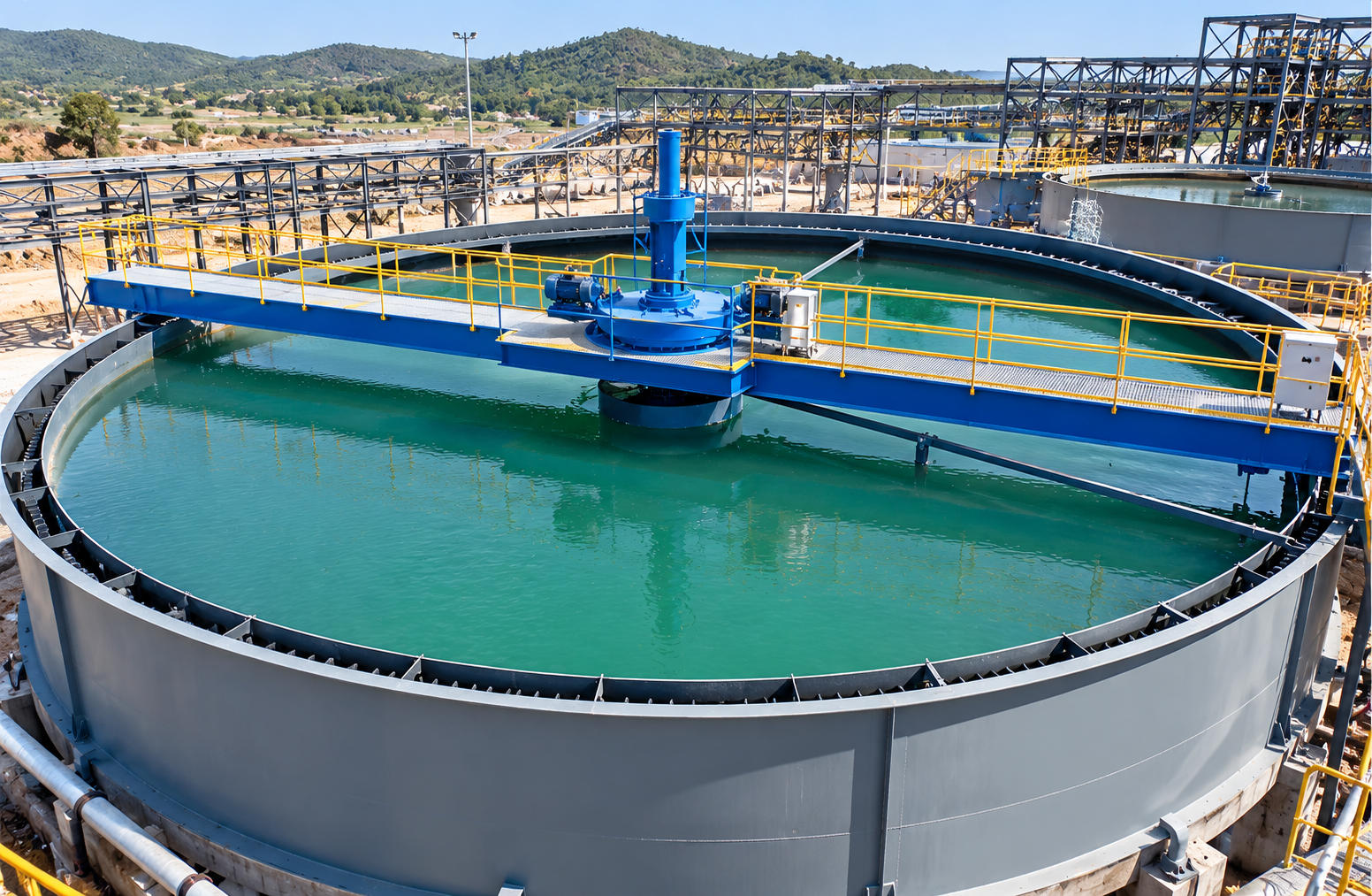
Tailings Thickening
After cyanide leaching and gold recovery, the remaining slurry is transferred to the tailings treatment system.
The first stage is thickening.
The thickener separates part of the process water from the solids, increasing the solids concentration of the tailings before further dewatering.
This reduces the volume of slurry requiring downstream treatment and creates better conditions for the subsequent dewatering stage.
Recovered overflow water can be returned to the plant water circuit where process conditions permit.
Tailings Dewatering & Dry Stacking
The thickened tailings are further dewatered to reduce their moisture content and improve handling characteristics.
After dewatering, the tailings are transported to the designated storage area for dry stacking.
Compared with directly handling highly diluted tailings slurry, this configuration is intended to facilitate:
Reduced Tailings Water Content • Easier Tailings Transportation • Process Water Recovery • More Controlled Tailings Storage
The recovered water can be recycled into the processing plant where technically appropriate, helping reduce the demand for fresh process water.
Complete Process Flowsheet
Ore Preparation
Run-of-Mine Ore
↓Single-Stage Open-Circuit Crushing
↓Crushed Ore
Grinding & Classification
Single-Stage Grinding
↓Hydrocyclone Classification
↓Coarse Fraction → Return to Mill
↓Qualified Overflow → Leaching
Gold Extraction
Whole-Ore Cyanide Leaching
↓Gold Dissolution
↓Activated Carbon Adsorption
↓Gold-Loaded Carbon
Final Gold Recovery
Desorption
↓Electrowinning
↓Gold-Bearing Sludge
↓Smelting
↓Final Gold Product
Tailings Treatment
Leached Tailings
↓Thickening
↓Dewatering
↓Dry Tailings
↓Dry Stacking
Main Equipment Configuration
Depending on the final engineering design, the Tanzania 1,200 t/d gold plant can include the following major equipment:
Process Section | Typical Equipment |
Feeding | Ore Feeder |
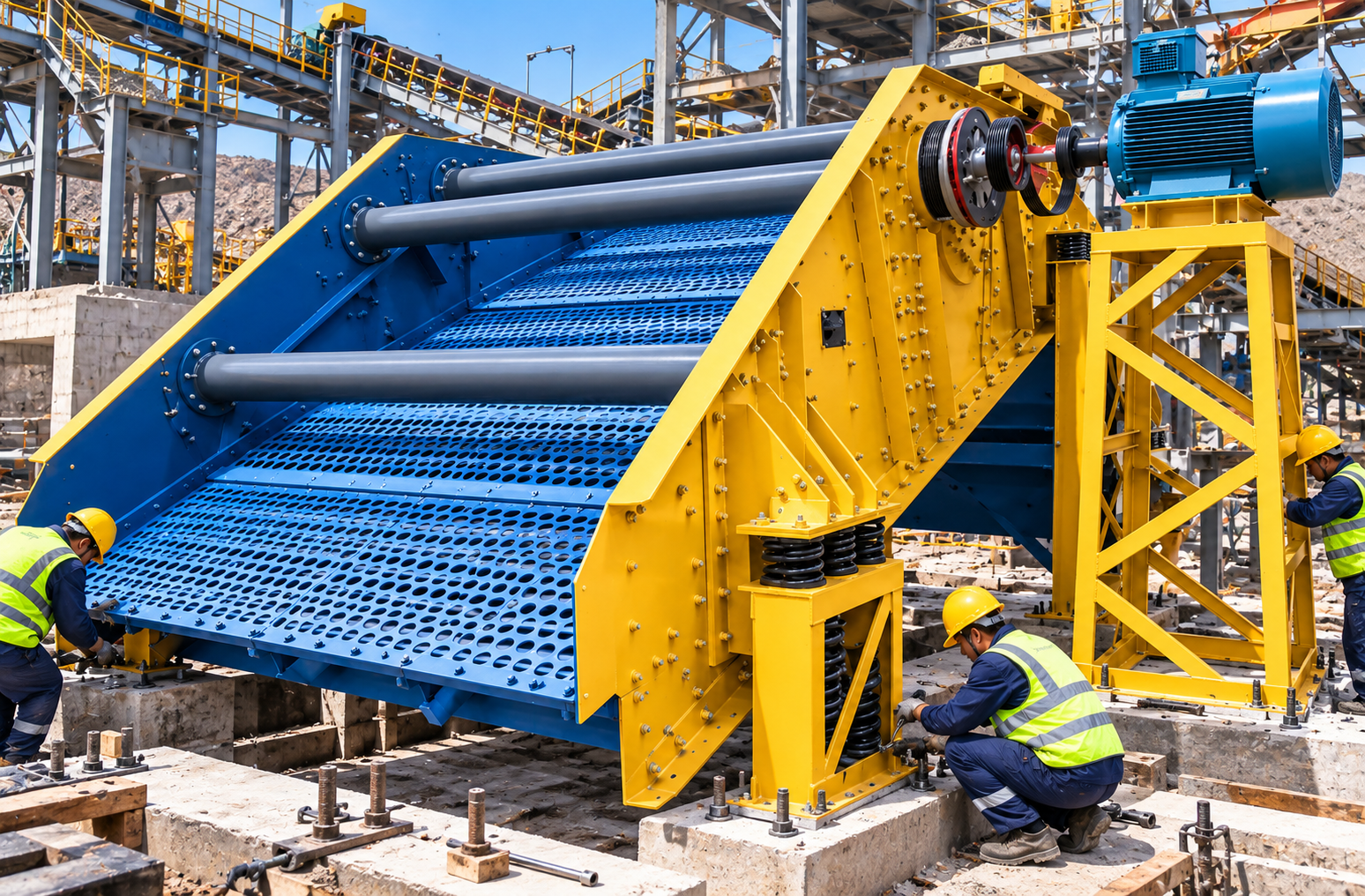
Crushing | Jaw Crusher / Suitable Primary Crusher |
Material Transfer | Belt Conveyors |
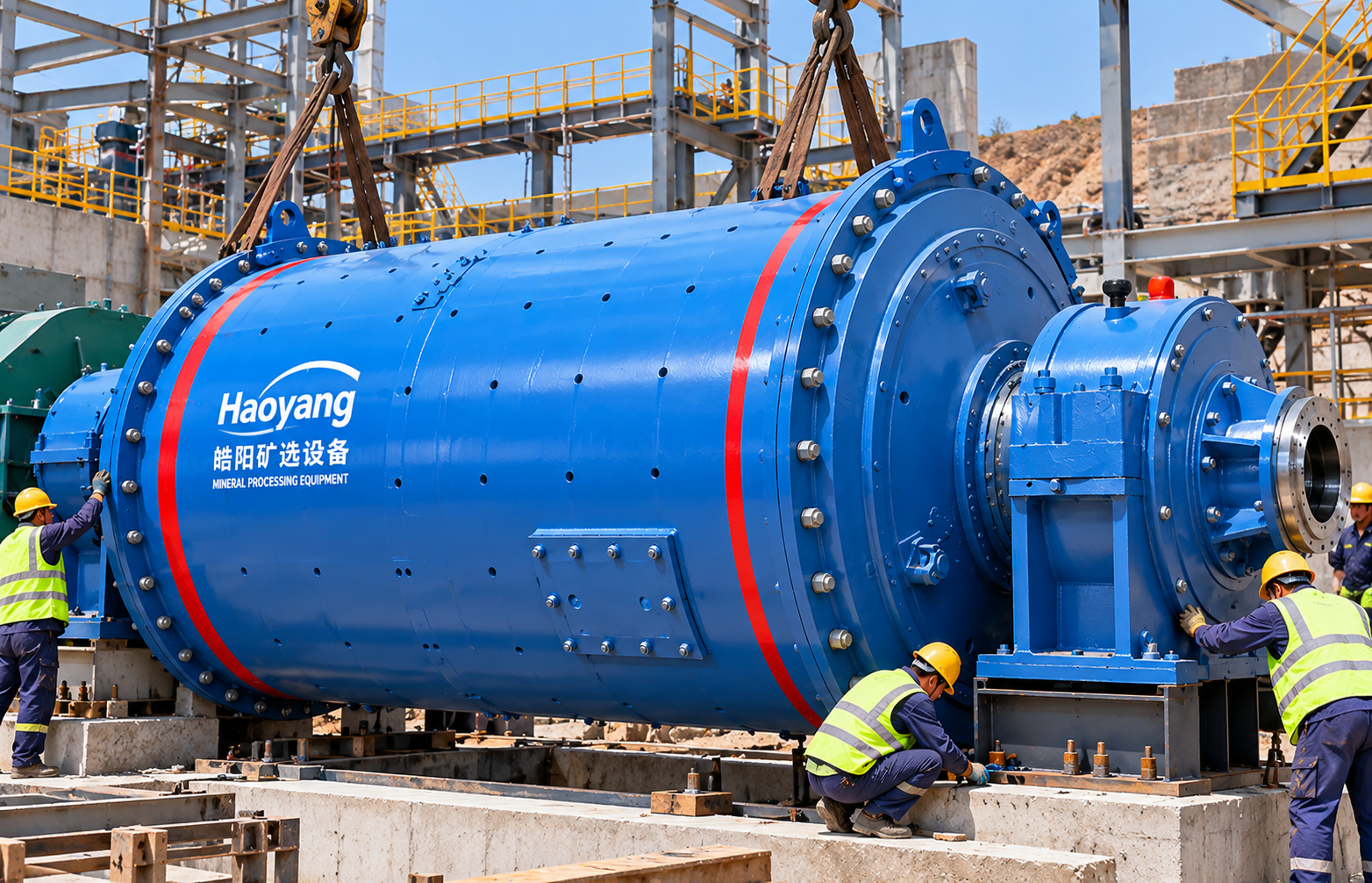
Grinding | Ball Mill |
Classification | Hydrocyclone Cluster |
Slurry Transfer | Slurry Pumps |
Cyanidation | Agitated Leaching Tanks |
Aeration | Air Supply / Blower System |
Gold Adsorption | Activated Carbon Adsorption System |
Carbon Separation | Carbon Screens |
Gold Recovery | Desorption & Electrowinning System |
Final Treatment | Gold Melting Furnace |
Tailings Concentration | Thickener |
Tailings Treatment | Dewatering Equipment |
Water Management | Process / Return Water System |
Key Project Advantages
1,200 t/d Processing Capacity
The processing plant is configured for a nominal throughput of 1,200 tonnes per day, providing an integrated gold recovery route from run-of-mine ore through final gold production.
Suitable for Both Oxide and Sulfide Gold Ore
The project involves two distinctly different feed types. Metallurgical testing confirmed that both could respond effectively to the selected whole-ore cyanidation process.
Proven Metallurgical Test Results
Under the tested conditions, the project achieved:
93.75% leaching recovery for 2.4 g/t oxide gold ore
and
91.58% leaching recovery for 10.7 g/t sulfide gold ore
These test results provided a clear basis for process selection and plant design.
Closed-Circuit Grinding Control
The combination of ball milling and hydrocyclone classification allows coarse material to return for additional grinding while qualified material proceeds to leaching.
This helps provide more consistent feed conditions for downstream gold extraction.
Complete Gold Recovery Route
The plant integrates:
Grinding + Cyanidation + Carbon Adsorption + Desorption + Electrowinning + Smelting
rather than treating individual process sections as isolated systems.
Tailings Dry Stacking
The tailings treatment section combines thickening and dewatering before final dry stacking, supporting more controlled tailings handling and process-water recovery.
Haoyang Integrated Gold Processing Solution
The Tanzania 1,200 t/d Gold Ore Processing Project demonstrates how process selection can be developed around actual ore characteristics and metallurgical test results.
Instead of selecting equipment first, Haoyang's approach begins with understanding the ore type, gold grade, mineralogical characteristics, liberation behavior, and leaching response, and then develops the appropriate process flowsheet and equipment configuration.
For gold processing projects, Haoyang can provide integrated technical solutions covering:
Mineral Processing Testwork → Process Flowsheet Design → Equipment Selection → Plant Layout → Equipment Manufacturing → Installation Guidance → Commissioning Support
Solutions can be customized according to processing capacity, ore characteristics, gold occurrence, target recovery, site conditions, water availability, tailings requirements, and customer investment plans.
Contact Haoyang Mineral Processing Equipment for gold ore testwork, process design, equipment selection, complete plant configuration, and project quotations.
Need a similar solution?
Tell us your ore, capacity, and budget — our engineers will prepare a tailored proposal within 48 hours.