Sudan 300 t/d Gold Tailings Reprocessing Project
Project Overview
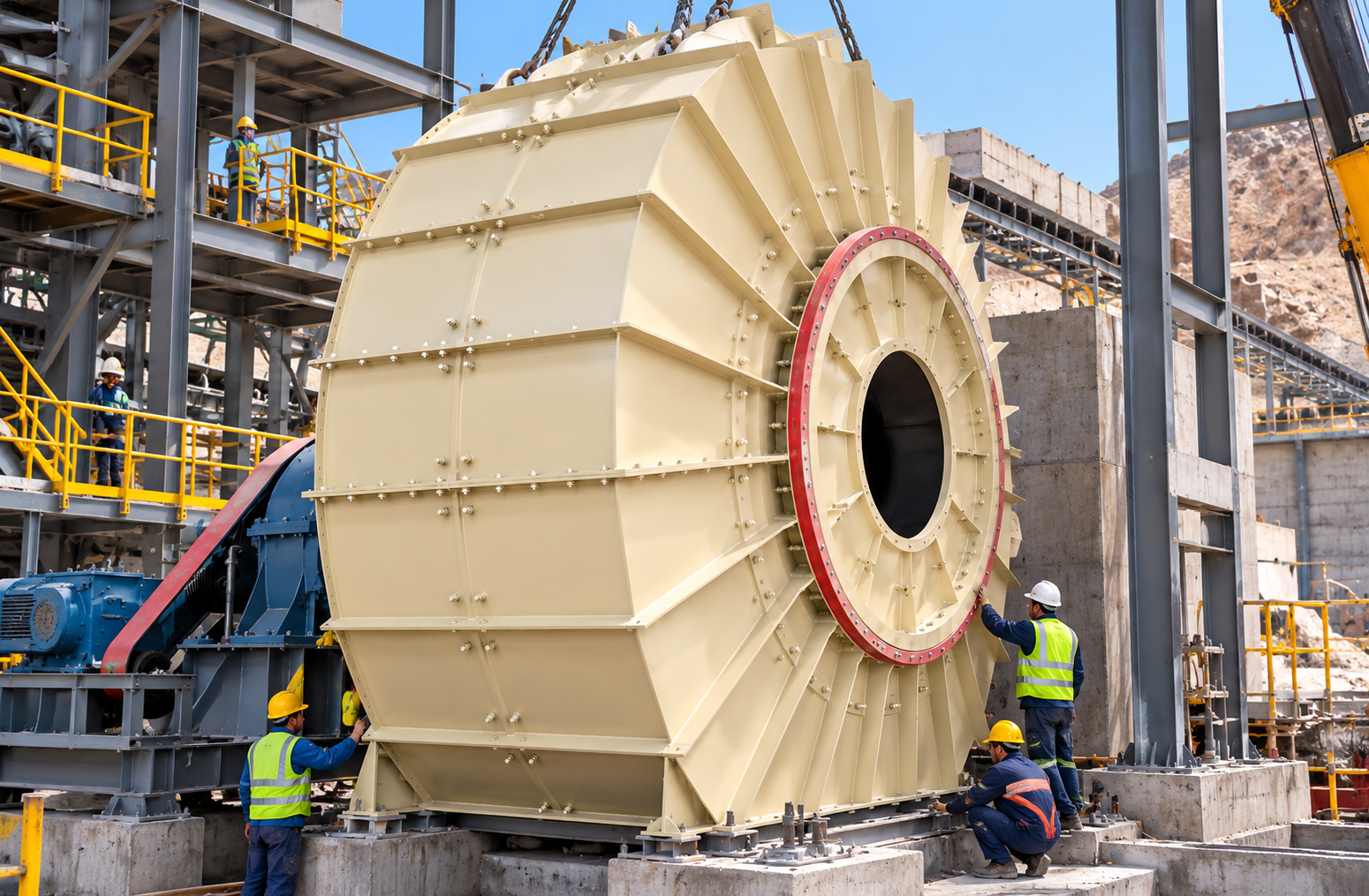
The Sudan 300 t/d Gold Tailings Reprocessing Project was developed to recover residual gold from previously processed tailings.
The feed material has an average gold grade of approximately 4.7 g/t Au. Because the tailings had already undergone previous processing and were relatively fine, a conventional crushing circuit was unnecessary. Instead, the project focused on removing foreign debris, further grinding and classifying the material, concentrating the slurry, and recovering gold through cyanide leaching and carbon adsorption.
Based on the feed characteristics and production requirements, Haoyang developed an integrated process covering:
Pre-screening → Grinding & Classification → Thickening → Cyanide Leaching & Carbon Adsorption → Desorption & Electrowinning → Smelting → Tailings Filtration → Process Water Recycling
The plant was designed for a nominal processing capacity of 300 tonnes per day, with particular attention to stable slurry handling, efficient gold recovery, tailings dewatering, and recycling of process water.
Project Information
|
Item |
Project Details |
|
Project Location |
Sudan |
|
Feed Material |
Previously Processed Gold Tailings |
|
Gold Grade |
Approx. 4.7 g/t Au |
|
Processing Capacity |
300 t/d |
|
Crushing Stage |
Not Required |
|
Grinding Circuit |
One-Stage Closed-Circuit Grinding |
|
Classification |
Hydrocyclone Cluster |
|
Gold Recovery Process |
Cyanide Leaching + Carbon Adsorption |
|
Gold Recovery System |
Desorption & Electrowinning |
|
Final Gold Treatment |
Smelting |
|
Tailings Treatment |
Filter Press Dewatering |
|
Process Water |
Clarification & Recycling |
Haoyang Process Solution
Tailings Pre-Screening & Feed Preparation
Unlike newly mined hard-rock ore, the feed material for this project consists of previously processed gold tailings.
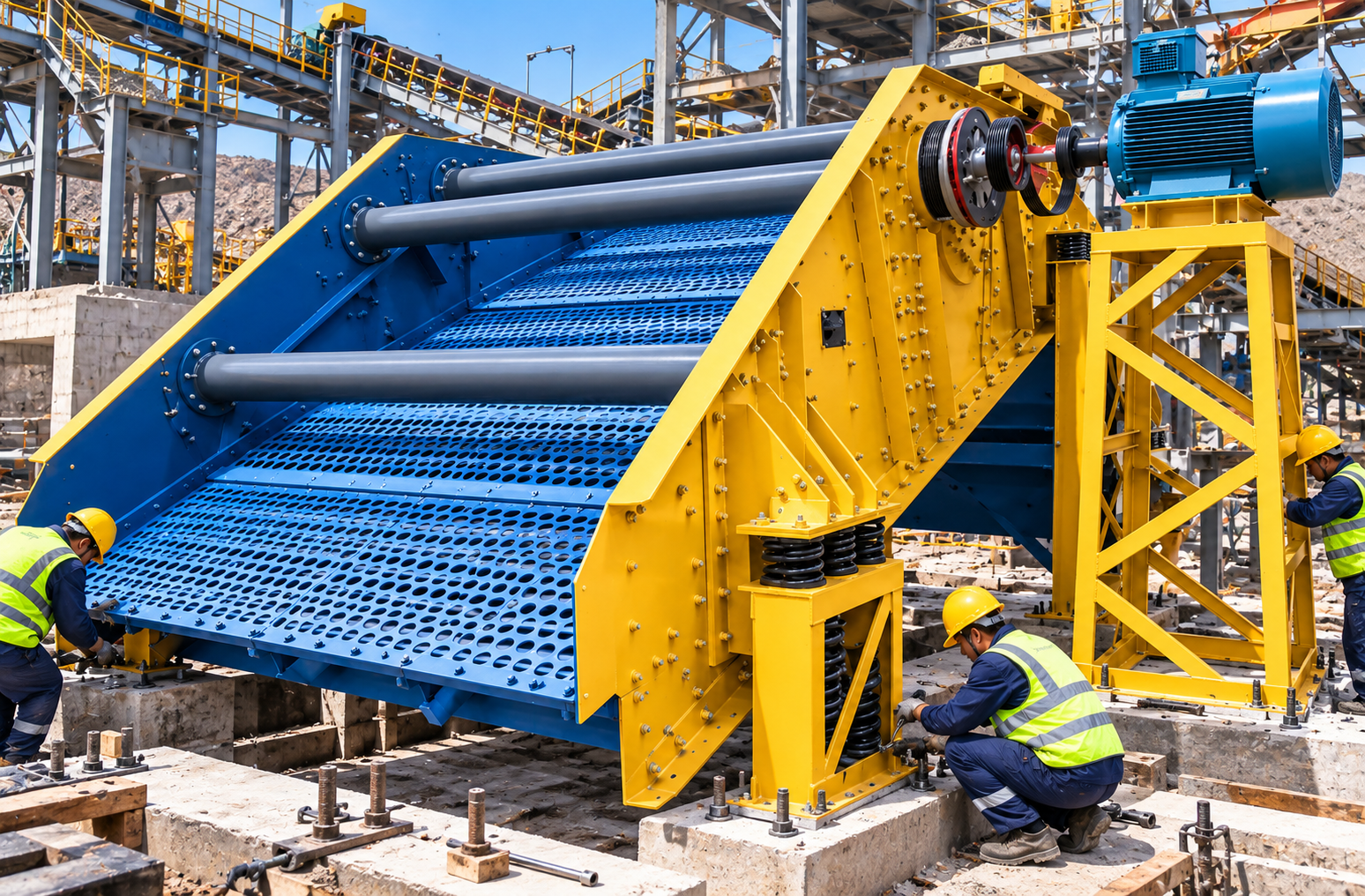
Although crushing is not required, the tailings contain foreign materials such as rags, wood fragments, plastic bottles, and other debris accumulated during previous processing, storage, and handling.
These materials can cause problems such as:
Screen Blockage • Pump Clogging • Pipeline Obstruction • Equipment Wear • Unstable Downstream Operation
For this reason, a dedicated pre-screening system is installed at the beginning of the process.
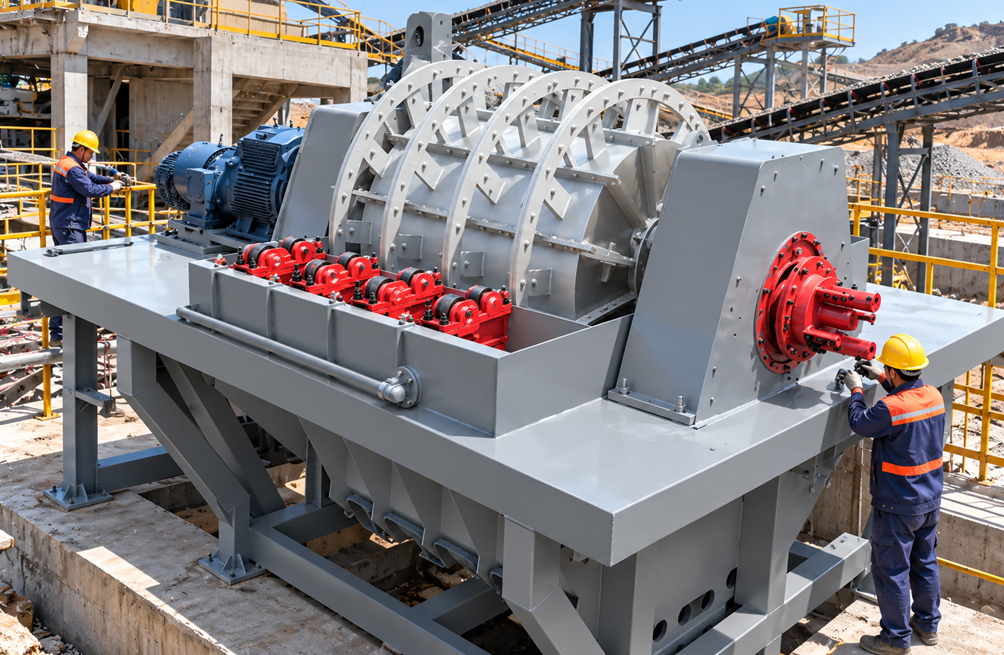
The tailings are transported by belt conveyor to a double-deck circular vibrating screen, where oversized particles and foreign materials are removed.
The screened material is then conveyed to the fine-material stockpile, providing a more consistent feed for the downstream grinding circuit.
One-Stage Closed-Circuit Grinding
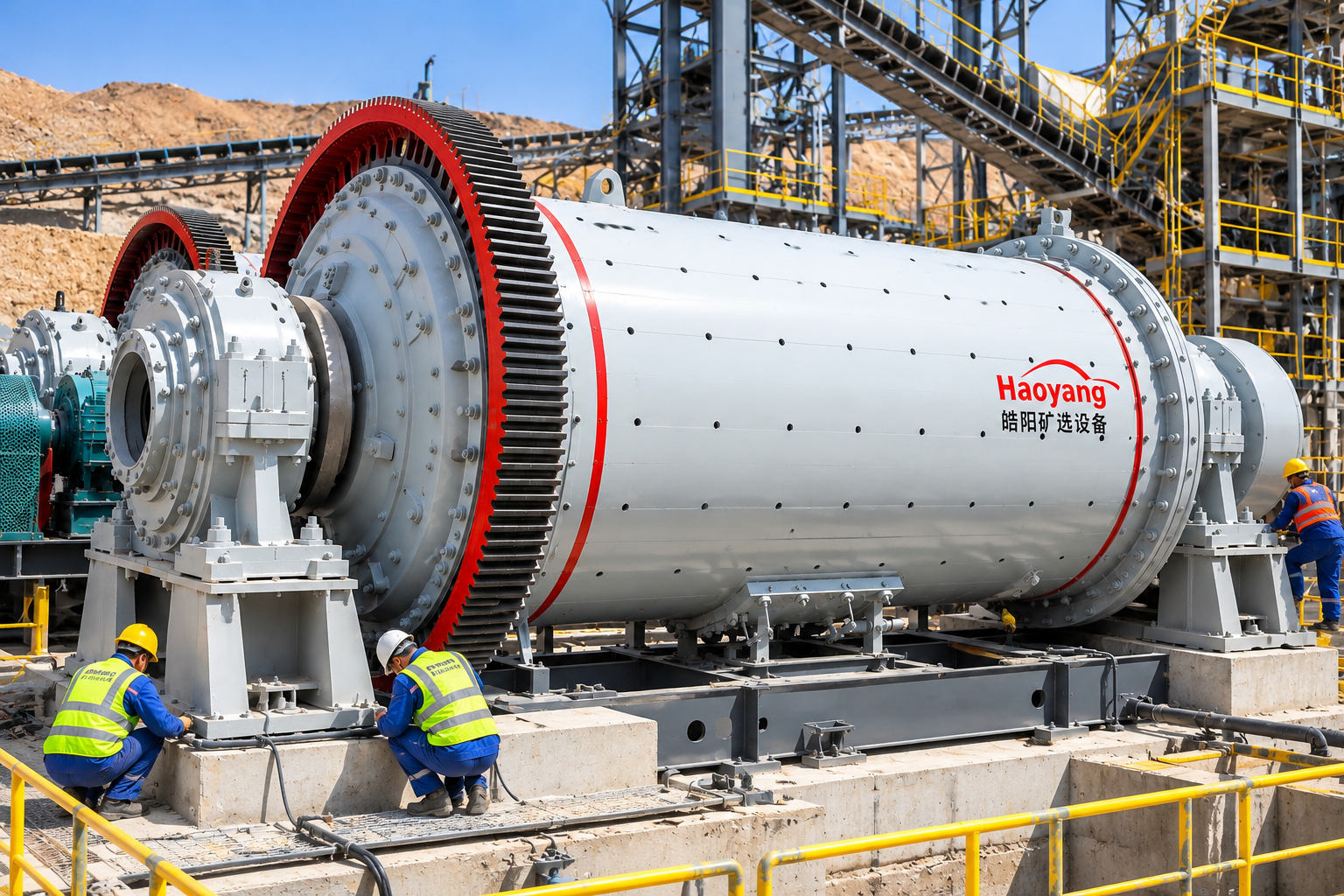
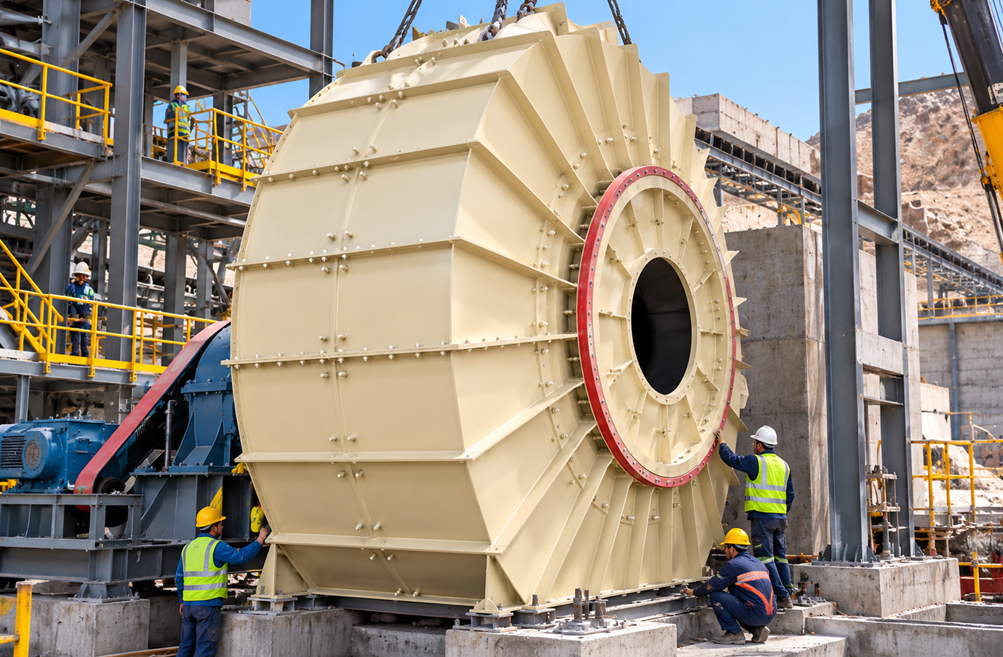
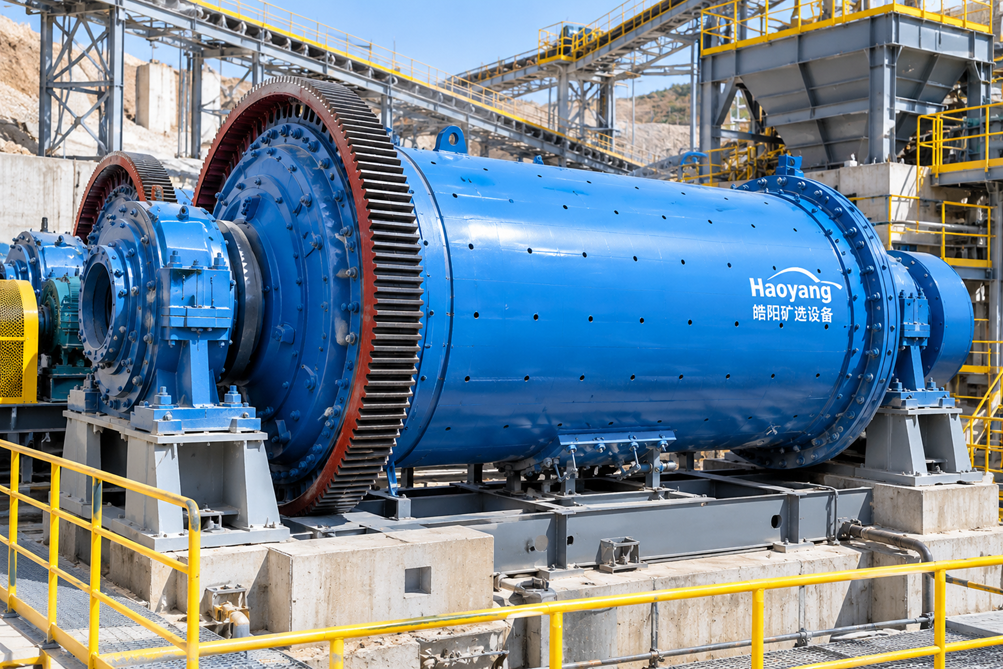
After pre-screening, the material enters an overflow ball mill for further grinding.
Although the original tailings are already relatively fine, additional grinding is required to improve the liberation of residual gold-bearing minerals and prepare the material for subsequent cyanide leaching.
The grinding circuit is configured as:
Tailings Feed → Overflow Ball Mill → Hydrocyclone Cluster
The hydrocyclone separates the ground slurry according to particle size.
Hydrocyclone Underflow → Returned to Ball Mill
Hydrocyclone Overflow → Sent to Trash Screening
This creates a one-stage closed-circuit grinding and classification system.
By returning coarse particles to the ball mill while allowing qualified fine material to proceed, the circuit provides better control over the particle-size distribution entering the leaching section.
Hydrocyclone Classification
A hydrocyclone cluster is used as the primary classification equipment in the grinding circuit.
Compared with allowing all ball mill discharge to proceed directly downstream, classification prevents insufficiently ground particles from entering the leaching circuit.
The hydrocyclone system provides several operational advantages:
Compact Footprint • High Classification Capacity • Continuous Operation • Simple Structure • Convenient Integration with Slurry Pumps and Ball Mills
Stable classification also helps maintain more consistent operating conditions in the subsequent thickening and cyanidation stages.
Trash Screening Before Thickening
The hydrocyclone overflow passes through a trash screen before entering the thickening system.
This secondary screening step removes remaining fibrous material and foreign debris that may have passed through the initial pre-screening stage.
This is particularly important for a tailings reprocessing project because accumulated debris can interfere with pumps, valves, agitation systems, carbon screens, and other downstream equipment.
After trash removal, the slurry flows by gravity to the thickener.
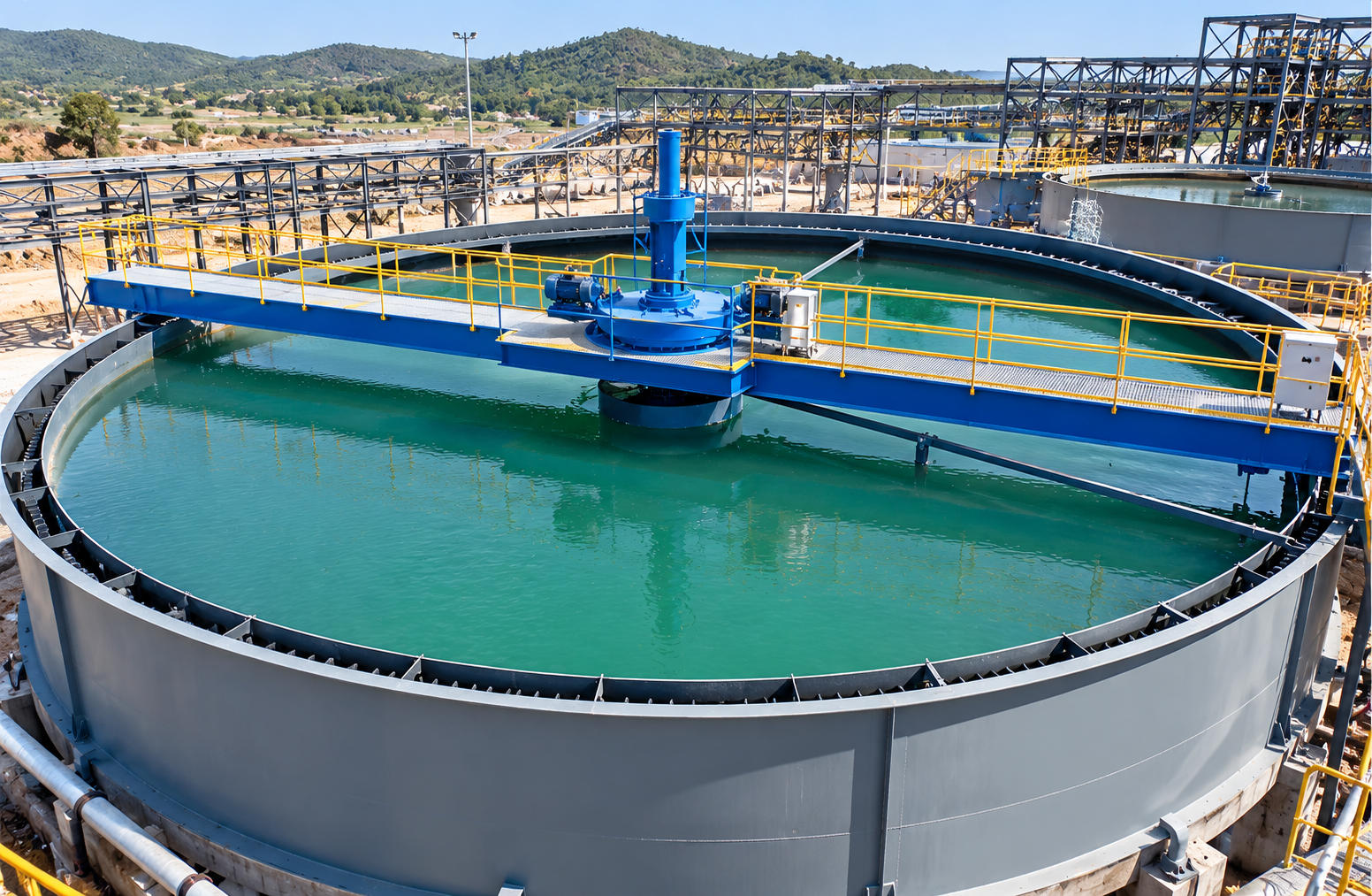
Slurry Thickening & Density Control
The screened slurry enters the thickener, where excess water is removed and the solids concentration is increased.
The thickener underflow is concentrated to approximately 40% solids, providing a more suitable slurry density for the subsequent cyanide leaching and carbon adsorption process.
The thickening stage performs several important functions:
Slurry Density Adjustment • Water Recovery • Reduction of Downstream Slurry Volume • Stabilization of Leaching Conditions
Recovering water at this stage also contributes to the plant's overall process-water recycling system.
Cyanide Leaching
After thickening, the concentrated slurry is pumped into a series of high-efficiency double-impeller leaching tanks.
Sodium cyanide is added under controlled alkaline conditions, allowing recoverable gold to dissolve and form soluble gold-cyanide complexes.
Air is supplied to the tanks by a Roots blower, while the double-impeller agitation system continuously mixes:
Ore Slurry + Cyanide Reagent + Air
Maintaining effective agitation and aeration helps create stable conditions for the gold dissolution process.
A simplified reaction stage can be represented as:
Gold-Bearing Slurry → Cyanide Leaching → Dissolved Gold-Cyanide Complex
Actual cyanide dosage, pH, retention time, aeration rate, and slurry density should be determined according to metallurgical testwork and operating conditions.
Activated Carbon Adsorption
After gold enters the solution as a dissolved cyanide complex, activated carbon is used to adsorb the dissolved gold.
The process therefore combines leaching and carbon adsorption into an integrated gold recovery circuit.
A simplified process route is:
Gold Dissolution → Activated Carbon Adsorption → Gold-Loaded Carbon
The carbon moves counter-currently through the adsorption circuit, allowing it to progressively accumulate gold.
Gold-loaded carbon is periodically removed from the designated tank and transferred to a carbon screen.
The slurry passing through the screen is returned to the process, while the retained loaded carbon is transferred hydraulically to the carbon handling system.
Loaded Carbon Washing
Before desorption, the gold-loaded carbon is transferred to a dedicated carbon storage and washing system.
Washing removes adhering slurry and impurities from the carbon surface, preparing the loaded carbon for efficient downstream gold stripping.
The cleaned loaded carbon is then transferred to the desorption and electrowinning system.
This stage helps maintain stable operation of the gold recovery circuit and improves the quality of material entering the desorption section.
Desorption & Electrowinning
The gold adsorbed onto activated carbon must be stripped before it can be recovered as a final metal product.
The loaded carbon therefore enters the desorption system, where gold is transferred from the carbon into a concentrated gold-bearing solution.
The solution then enters the electrowinning system, where dissolved gold is recovered electrochemically.
The process can be summarized as:
Gold-Loaded Carbon → Desorption → Gold-Rich Solution → Electrowinning → Gold-Bearing Sludge
After stripping, the regenerated carbon can be returned to the adsorption circuit where appropriate, reducing carbon consumption and supporting continuous operation.
Gold Smelting
The gold-bearing sludge recovered from electrowinning is collected and prepared for smelting.
It is then fed into a gold melting furnace, where the material is melted to produce the final gold-bearing metal product.
The downstream route is:
Electrowinning → Gold-Bearing Sludge → Smelting → Doré
The final doré can subsequently undergo further refining depending on the required product specification.
Cyanide Tailings Dewatering
After leaching and gold recovery, the remaining tailings slurry enters the tailings treatment system.
The cyanide tailings are fed into a chamber filter press for solid-liquid separation.
Under pressure, water is removed from the slurry and a relatively dry filter cake is produced.
The dewatered tailings contain approximately 20–25% moisture under the stated project conditions.
The filter cake is discharged from the filter press and transported to the designated tailings storage facility.
This configuration reduces the amount of free water transported with the tailings and facilitates subsequent handling.
Process Water Recovery & Recycling
Water management is an important part of the overall project design.
Filtrate recovered from the filter press flows into a wastewater treatment and clarification system.
After clarification and appropriate treatment, recovered water is transferred to the return-water tank and reused within the processing plant.
The water circuit can be summarized as:
Tailings Slurry → Filter Press → Filtrate → Treatment / Clarification → Return Water Tank → Recycled to Plant
This closed-loop approach helps:
Reduce Freshwater Consumption • Improve Water Utilization • Reduce Wastewater Discharge • Lower Operating Water Demand
For cyanide-containing process water, actual recycling and discharge arrangements must follow the project's detoxification design, water chemistry requirements, and applicable environmental standards.
Complete Process Flowsheet
The complete processing route for the Sudan project can be presented more clearly on the website as:
Gold Tailings
↓Pre-Screening
↓Overflow Ball Mill
↓Hydrocyclone Classification
↓Trash Screening
↓Thickening
↓Cyanide Leaching
↓Activated Carbon Adsorption
↓Loaded Carbon Screening & Washing
↓Desorption & Electrowinning
↓Gold Smelting
↓Doré Gold
Meanwhile, the tailings treatment route is:
Leached Tailings → Filter Press → Dewatered Tailings → Tailings Storage
and:
Filter Press Filtrate → Water Treatment → Return Water Tank → Process Water Reuse
Main Equipment Configuration
The project can be equipped with the following major processing equipment:
|
Process Stage |
Main Equipment |
|
Pre-Screening |
Double-Deck Circular Vibrating Screen |
|
Grinding |
Overflow Ball Mill |
|
Classification |
Slurry Pump + Hydrocyclone Cluster |
|
Trash Removal |
Trash Screen |
|
Thickening |
High-Efficiency Thickener |
|
Leaching |
Double-Impeller Leaching Tanks |
|
Aeration |
Roots Blower |
|
Carbon Separation |
Carbon Screen |
|
Gold Recovery |
Desorption & Electrowinning System |
|
Smelting |
Gold Melting Furnace |
|
Tailings Dewatering |
Chamber Filter Press |
|
Water Recycling |
Clarification Tank + Return Water System |
Project Highlights
No Conventional Crushing Circuit
Because the feed consists of previously processed fine gold tailings, the plant eliminates the conventional primary and secondary crushing stages, simplifying the overall process configuration.
Tailings-Specific Pre-Treatment
Dual debris-removal stages help protect pumps, pipelines, tanks, and downstream gold recovery equipment from foreign materials commonly found in historical tailings.
Closed-Circuit Grinding
The combination of an overflow ball mill and hydrocyclone cluster provides controlled regrinding and classification before cyanidation.
Integrated Cyanide Gold RecoveryThe process combines cyanide leaching, activated carbon adsorption, desorption, electrowinning, and smelting into a complete gold recovery route.
Tailings Dewatering
A chamber filter press converts the final tailings slurry into a transportable filter cake, simplifying tailings handling.
Process Water Recycling
Recovered filtrate and thickener water can be treated and reused within the plant, reducing the demand for fresh process water.
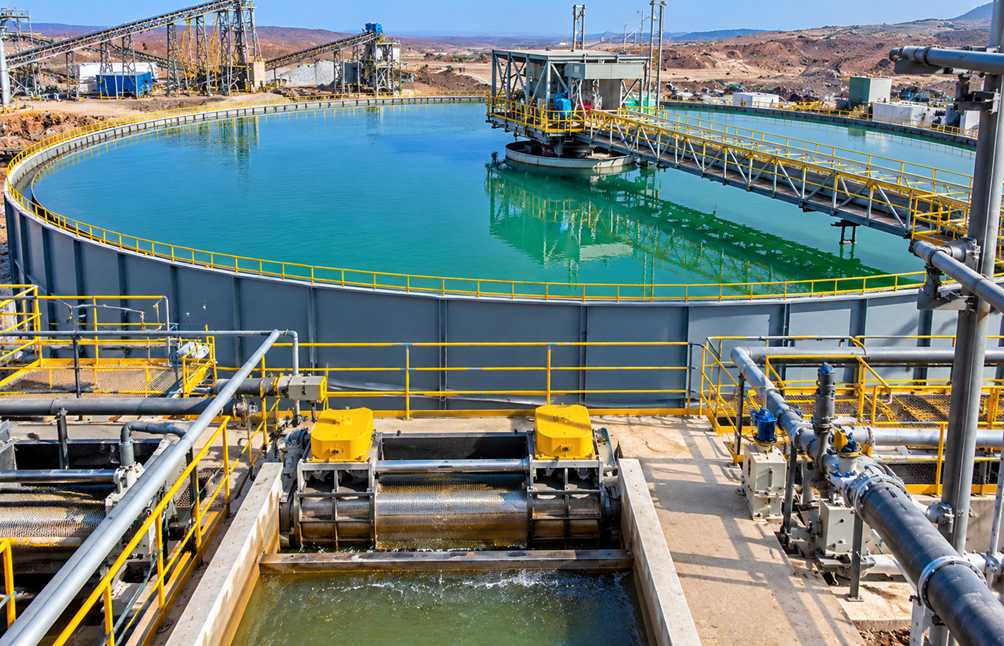
Haoyang Integrated Project Solution
The Sudan 300 t/d Gold Tailings Reprocessing Project demonstrates a process configuration specifically designed for recovering residual gold from previously processed material rather than treating conventional run-of-mine ore.
Haoyang can provide integrated project services covering:
Ore / Tailings Testwork → Process Development → Engineering Design → Equipment Selection → Equipment Manufacturing → Plant Layout → Installation Guidance → Commissioning → Production Support
For gold tailings projects, the process should always be customized according to residual gold grade, gold occurrence, particle-size distribution, mineral liberation, cyanide consumption, leaching characteristics, water chemistry, and tailings properties.
Contact Haoyang for gold tailings testwork, process design, equipment selection, and a customized gold recovery plant solution.Need a similar solution?
Tell us your ore, capacity, and budget — our engineers will prepare a tailored proposal within 48 hours.