Indonesia 150 TPD Gold Ore Processing Plant
Project Overview
The Indonesia 150 TPD Gold Ore Processing Project was developed to process gold-bearing ore with an average Au grade of 5.75 g/t. The ore has a true density of approximately 2.62 t/m³ and a bulk density of approximately 1.32 t/m³, with gold identified as the primary valuable element for recovery.
Based on the characteristics of the ore and the required processing capacity, Haoyang Mineral Processing Equipment developed an integrated gold recovery solution covering ore washing, crushing, grinding and classification, slurry thickening, cyanide leaching, activated carbon adsorption, desorption and electrowinning, gold smelting, and tailings dewatering.
The process was designed to provide stable continuous operation while improving gold recovery, controlling the final grinding product, and maximizing the recycling of process water.
Haoyang Processing Solution
Process Design
The complete processing route is designed around a cyanide leaching and carbon adsorption system, with the upstream crushing and grinding circuits preparing the ore to achieve suitable conditions for gold dissolution.
The main process consists of:
Ore Washing → Crushing → Grinding & Classification → Trash Screening → Thickening → Cyanide Leaching → Carbon Adsorption → Desorption & Electrowinning → Gold Smelting
A separate tailings dewatering and water recycling circuit is incorporated into the plant to reduce water consumption and facilitate tailings management.
Ore Washing & Screening
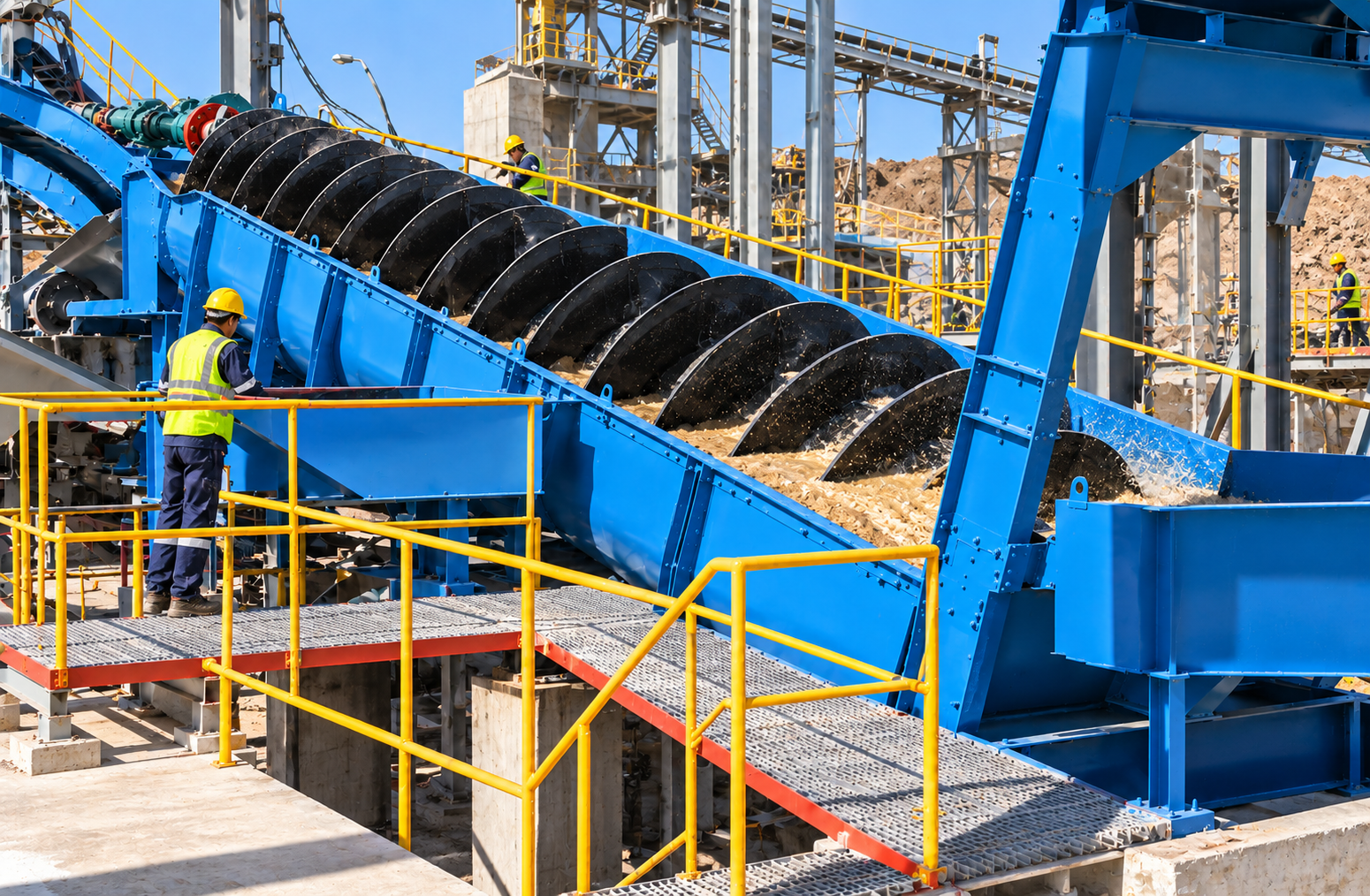
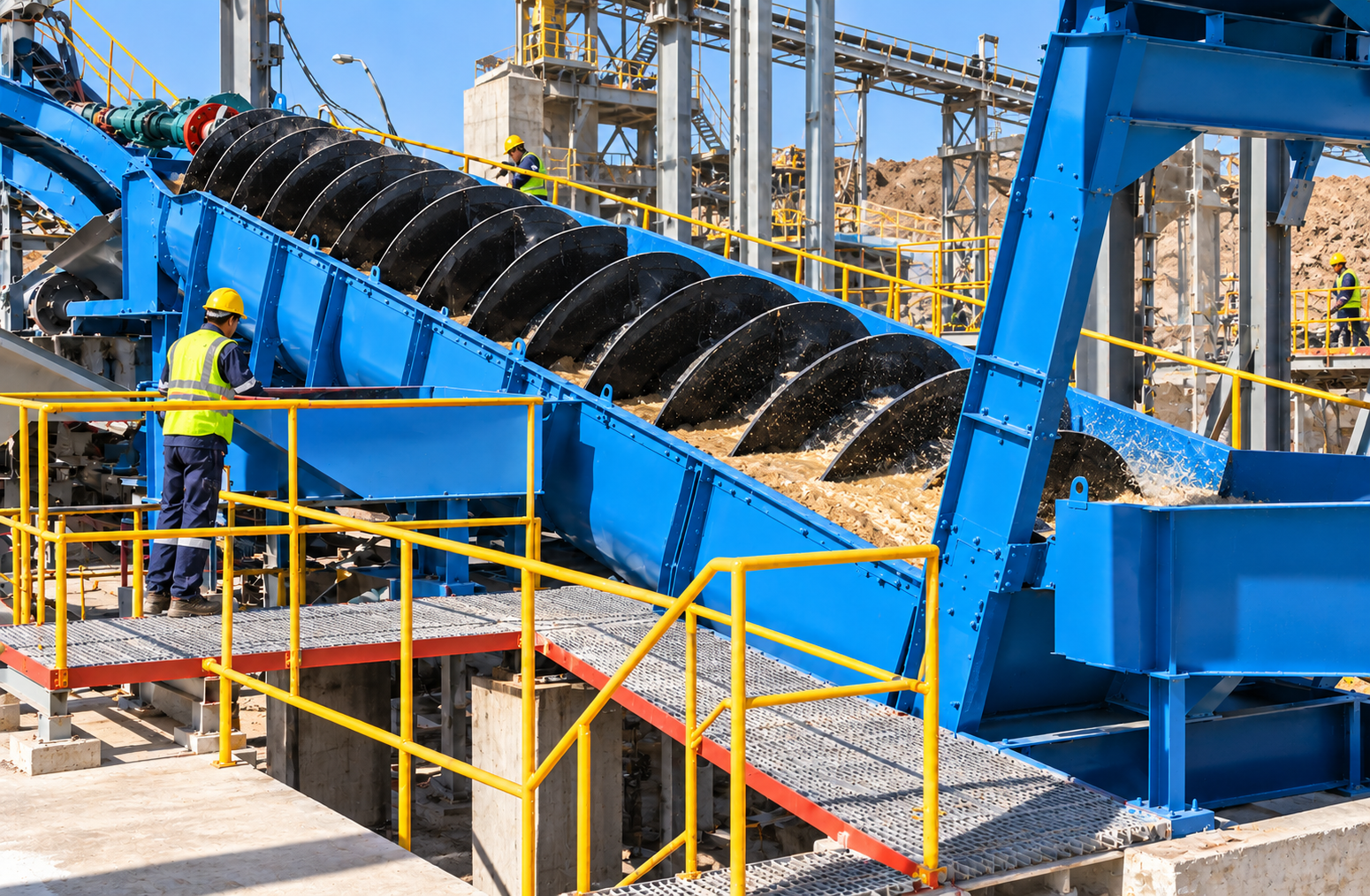
The run-of-mine ore first enters the washing and screening section.
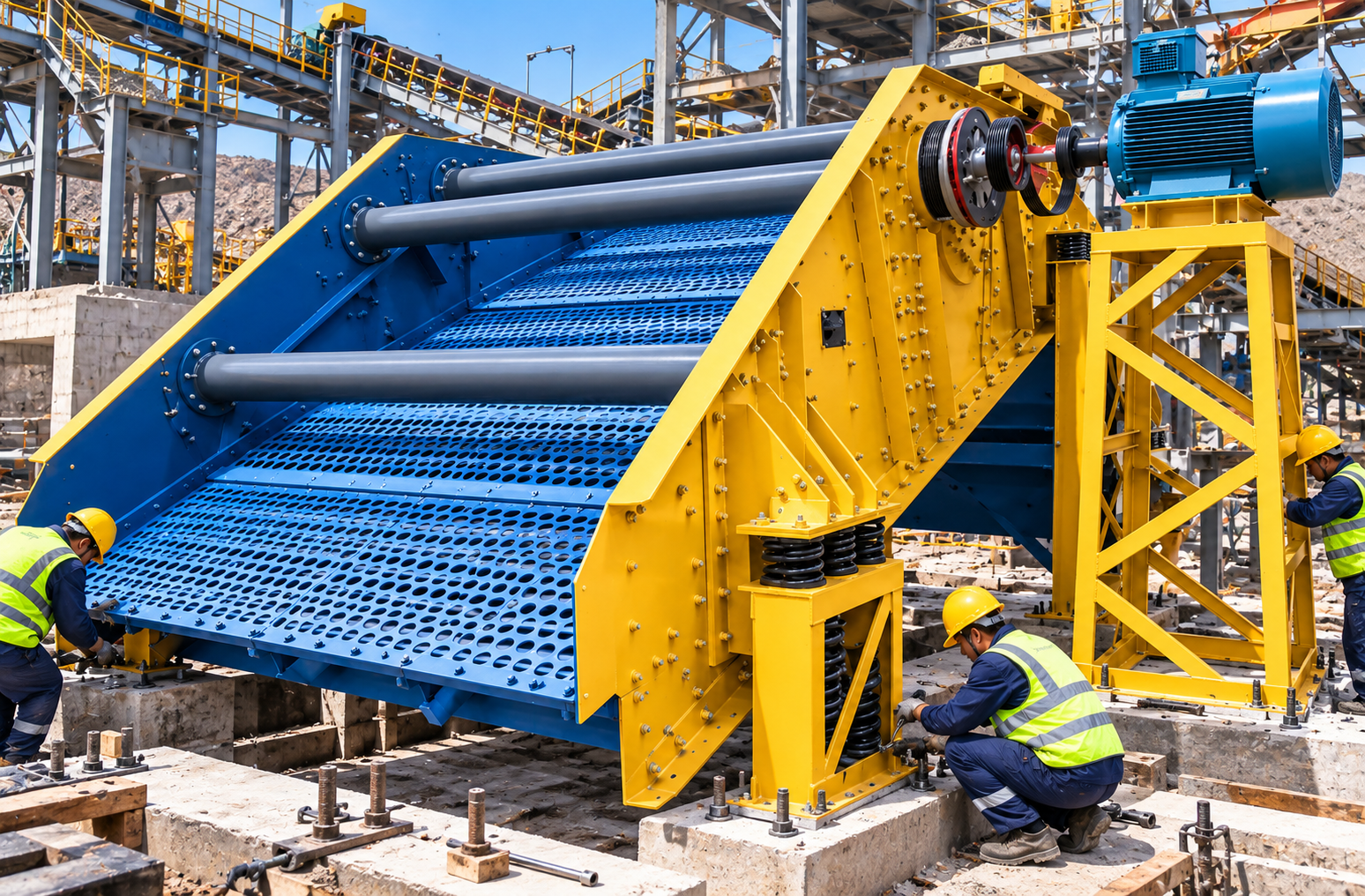
A vibrating screen equipped for ore washing is used to remove surface clay, mud, and other fine materials that could negatively affect downstream crushing and grinding operations.
Effective washing helps improve the handling characteristics of the ore while reducing the risk of excessive clay entering the crushing circuit.
After washing and screening, the prepared ore is transferred to the crushing section for further size reduction.
Two-Stage Crushing
The crushing section adopts a two-stage open-circuit crushing configuration.
The run-of-mine material is progressively reduced through the crushing system until the final crushed product reaches approximately:
Final Crushing Size: -15 mm
Controlling the crushed product size provides a more uniform feed for the grinding circuit and helps improve subsequent grinding efficiency.
The crushing system is designed for straightforward operation and maintenance while maintaining stable feed preparation for continuous plant production.
Grinding & Classification
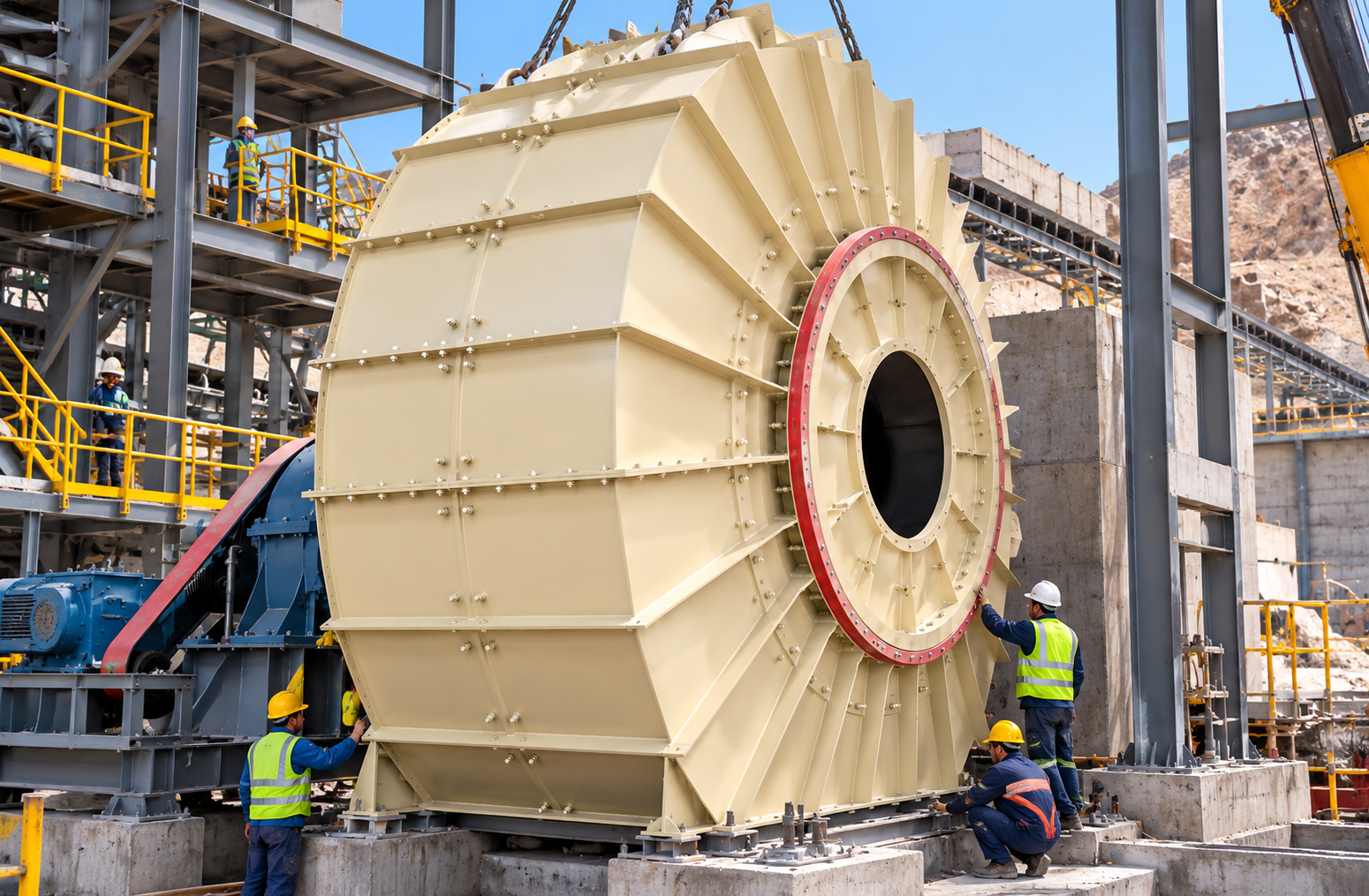
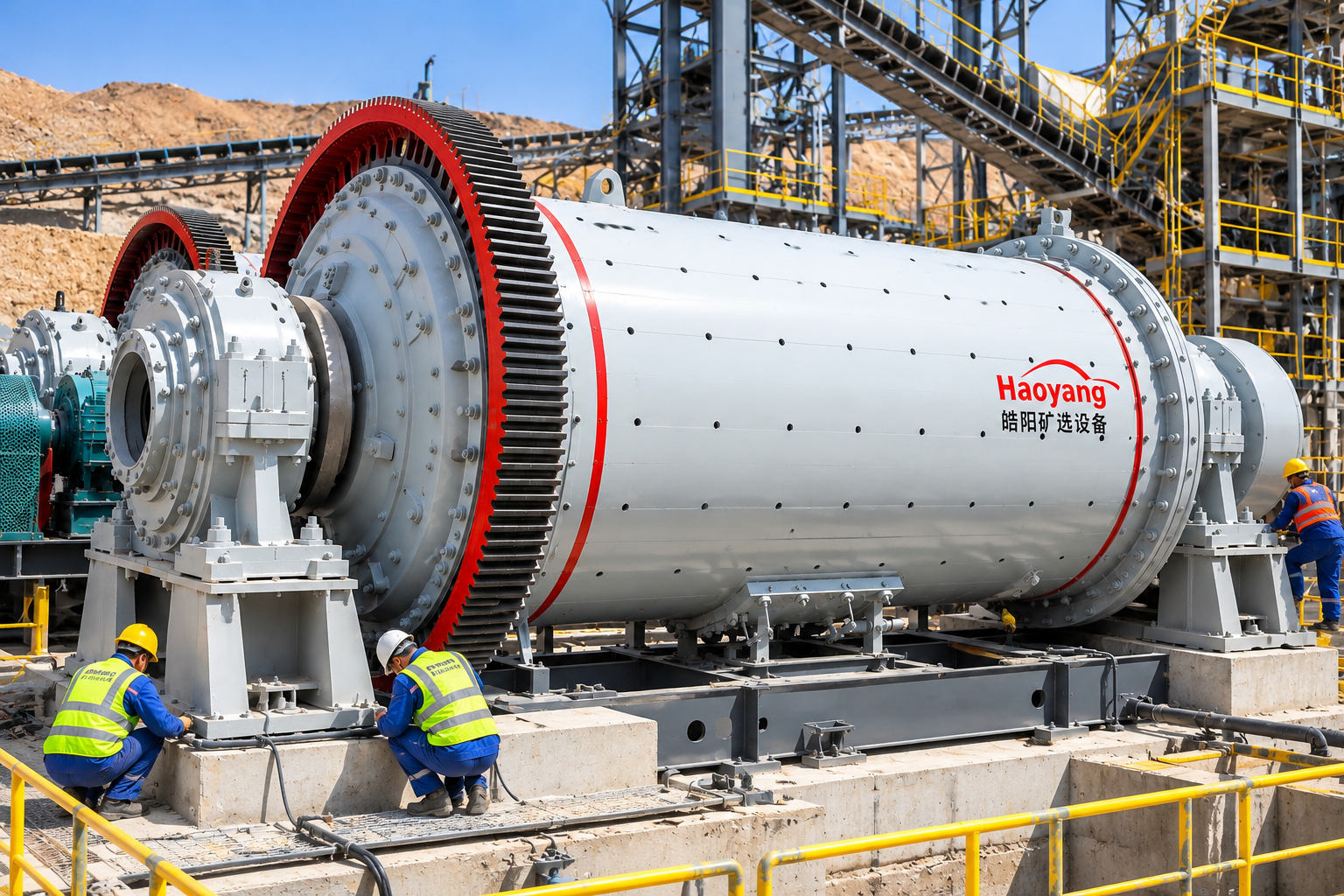
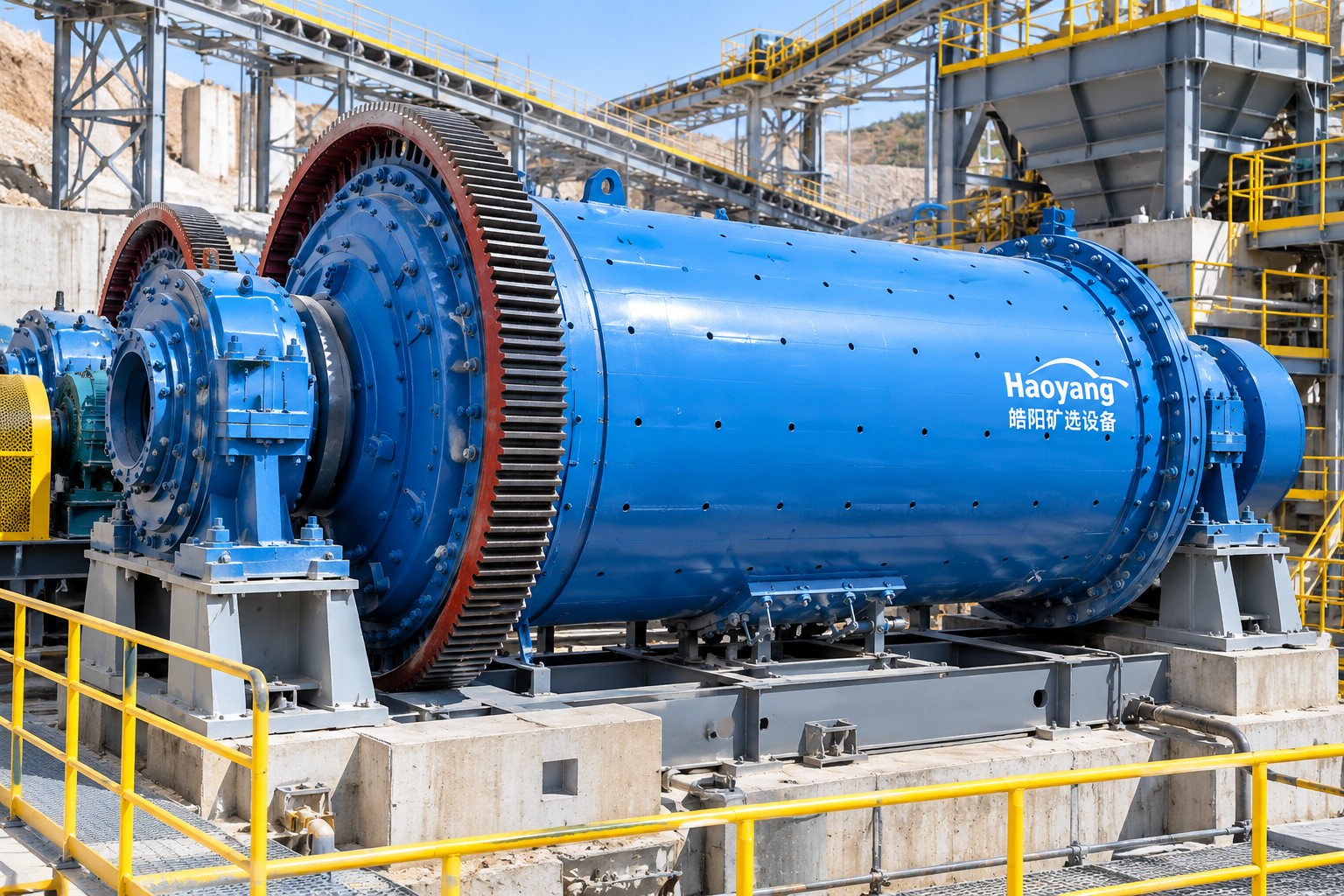
After crushing, the ore enters a single-stage closed-circuit grinding and classification system.
The grinding circuit further reduces the ore particle size to achieve sufficient liberation of gold-bearing minerals. Classification equipment separates the ground material according to particle size.
Coarse particles are returned to the grinding circuit for further size reduction, while material meeting the required fineness proceeds to the next processing stage.
This closed-circuit arrangement helps:
Maintain a stable grinding product size
Reduce unnecessary overgrinding
Improve grinding efficiency
Provide consistent feed conditions for cyanide leaching
Trash Screening & Slurry Thickening
Before entering the leaching circuit, the classified slurry passes through a trash screen.
The screen removes wood chips, fibers, plastic fragments, and other foreign materials that could interfere with pumps, pipelines, agitators, or the carbon adsorption system.
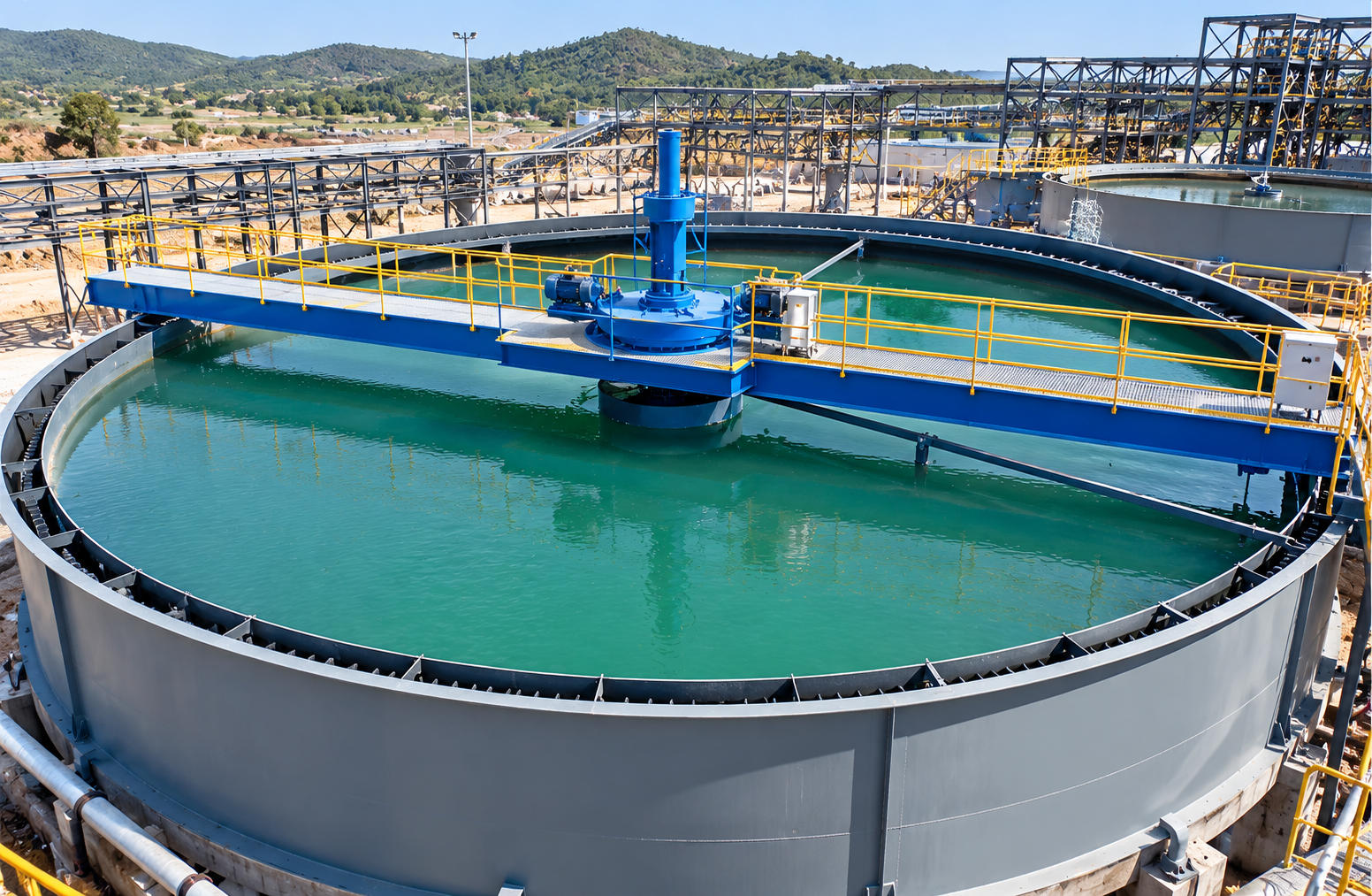
The screened slurry then flows by gravity into a thickener.
Inside the thickener, excess water is removed and the slurry concentration is increased to provide more suitable pulp conditions for the subsequent cyanide leaching process.
The thickener underflow is discharged and transported by slurry pumps to the leaching section.
Cyanide Leaching & Carbon Adsorption
The concentrated slurry enters the cyanide leaching and activated carbon adsorption circuit, which forms the core gold recovery stage of the plant.
Under controlled operating conditions, cyanide solution dissolves the liberated gold from the ore and forms soluble gold-cyanide complexes.
Activated carbon is introduced into the circuit to adsorb dissolved gold from the slurry.
Through continuous leaching and adsorption, gold is gradually transferred from the ore into solution and subsequently collected on the activated carbon.
After reaching the required loading level, the gold-loaded carbon is separated from the slurry through carbon screening and transferred to the gold recovery section.
Desorption & Electrowinning
The recovered gold-loaded carbon is sent to the desorption and electrowinning system.
A high-temperature and high-pressure desorption process is used to strip gold from the activated carbon into a concentrated gold-bearing solution.
The pregnant solution then enters the electrowinning system, where dissolved gold is recovered and concentrated into gold-bearing sludge.
This integrated process allows the activated carbon to be regenerated and reused while recovering gold in a form suitable for final smelting.
Gold Smelting
The gold-bearing sludge produced by electrowinning is collected and prepared for the final metallurgical stage.
After the necessary treatment, it is fed into the gold smelting furnace.
Through high-temperature smelting, impurities are separated and the recovered precious metals are consolidated into the final doré gold product.
This completes the main gold recovery circuit.
Tailings Dewatering
After cyanide leaching and gold recovery, the remaining tailings slurry is transferred to the dewatering section.
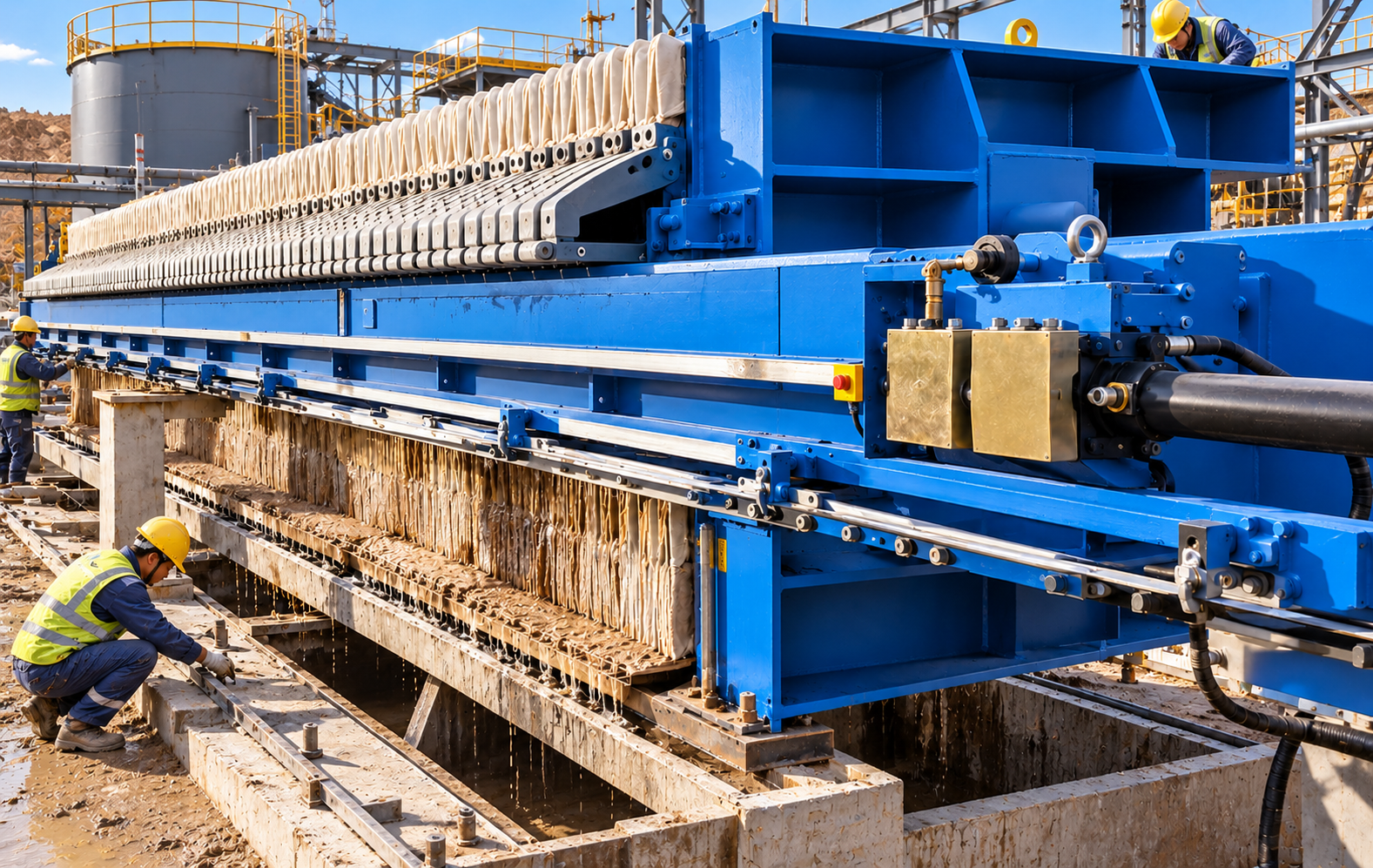
A filter press is used to separate solid tailings from process water.
The resulting filter cake has significantly lower moisture content than conventional slurry tailings, making it easier to transport and manage.
The dewatered tailings are then conveyed or transported to the designated tailings storage facility for dry stacking.
This approach reduces the amount of free water entering the tailings storage area and simplifies subsequent tailings management.
Process Water Recycling
Water recovered during thickening and tailings filtration is collected and returned to the processing plant wherever technically suitable.
The water circulation system reduces the demand for fresh process water and improves the overall water-use efficiency of the concentrator.
The tailings treatment route can be summarized as:
Leaching Tailings → Filter Press → Dewatered Tailings → Transportation → Dry Stacking
Meanwhile:
Recovered Filtrate → Process Water System → Reuse in the Processing Plant
Complete Process Flowsheet
Run-of-Mine Gold Ore
→ Ore Washing & Screening
→ Two-Stage Open-Circuit Crushing
→ Final Crushed Product (-15 mm)
→ Single-Stage Closed-Circuit Grinding & Classification
→ Trash Screening
→ Slurry Thickening
→ Cyanide Leaching
→ Activated Carbon Adsorption
→ Gold-Loaded Carbon Recovery
→ High-Temperature & High-Pressure Desorption
→ Electrowinning
→ Gold-Bearing Sludge
→ Smelting
→ Doré Gold
Tailings Treatment:Leaching Tailings → Filter Press Dewatering → Dry Tailings → Dry Stacking
Water Circuit:Filtrate / Recovered Water → Process Water Recycling → Reuse in the Plant
Key Project Highlights
150 TPD Processing Capacity — A compact processing solution designed for continuous small-to-medium-scale gold production.
5.75 g/t Feed Gold Grade — The process is configured specifically around gold as the primary recoverable valuable element.
Integrated Gold Recovery Circuit — Washing, crushing, grinding, cyanidation, carbon adsorption, desorption, electrowinning, and smelting are integrated into one complete processing route.
Closed-Circuit Grinding — Provides more stable particle-size control and suitable feed conditions for downstream leaching.
Carbon Adsorption Technology — Activated carbon efficiently captures dissolved gold from the cyanide leaching circuit.
Desorption–Electrowinning–Smelting System — Provides a complete downstream route from gold-loaded carbon to final doré gold.
Tailings Dewatering & Dry Stacking — Filter-press dewatering reduces tailings moisture and facilitates transportation and storage.
Process Water Recycling — Recovered water is reused within the plant where suitable, reducing freshwater demand and improving overall water efficiency.
Need a similar solution?
Tell us your ore, capacity, and budget — our engineers will prepare a tailored proposal within 48 hours.