Wet Grinding Mill Maintenance Guide
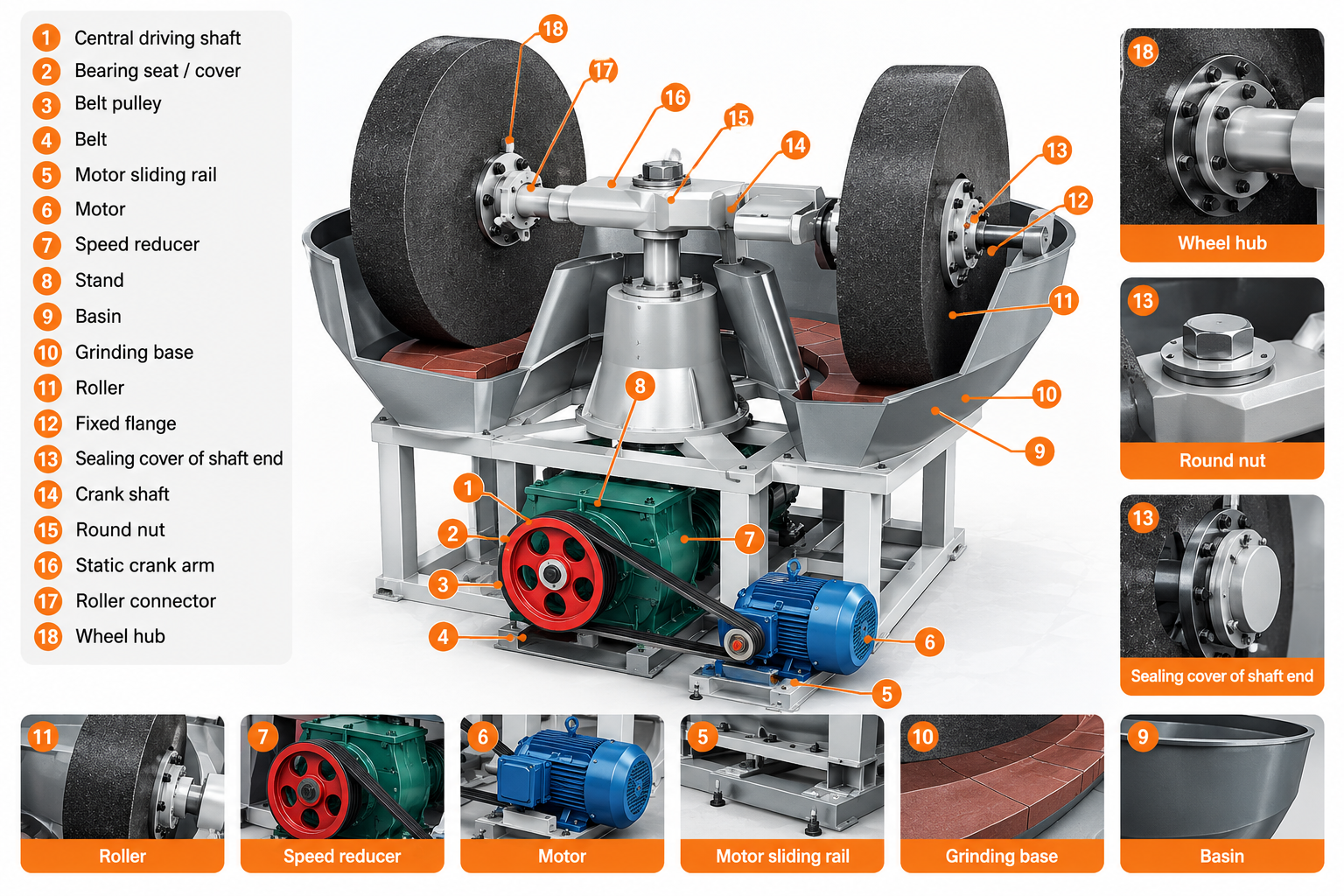
Proper maintenance is essential to ensure the stable operation, grinding efficiency, and service life of a wet grinding mill. The following maintenance procedures are recommended for routine operation.
Daily Maintenance
Check the bearings, gearbox, gears, and other lubrication points daily to ensure sufficient and clean lubricant.
During the initial operating period, replace the lubricating oil after approximately one month of operation. Afterward, replace it approximately every six months, or according to actual operating conditions and the maintenance schedule.
Use suitable high-temperature, anti-wear grease for critical bearings. Bearing temperatures should be monitored carefully and generally kept below 80°C.
After daily operation:
Remove residual ore and slurry from the grinding basin.
Remove metal fragments, stones, or other hard foreign materials that could damage the rollers or basin.
Check belt tension and alignment.
Inspect bolts and fasteners for looseness.
Check the machine for abnormal vibration, noise, leakage, or overheating.
Inspect visible components for excessive wear or deformation.
Any abnormal condition should be investigated before the next start-up.
Periodic Maintenance
Inspect major wear parts and transmission components, including:
Grinding Rollers • Grinding Basin • Liners • Bearings • Gears • Belts • Fasteners
Replace excessively worn or damaged components promptly to prevent secondary damage.
Bearing temperature and operating noise should also be checked regularly. As a general guideline, the bearing temperature rise should not exceed approximately 55°C.
Monthly InspectionPerform a more comprehensive inspection of the equipment:
Thoroughly clean internal components.
Inspect the gearbox and transmission system for wear.
Check the clearance and condition of the main bearings.
Inspect lubrication lines and seals.
Check the grinding rollers and basin for uneven wear.
Adjust the roller-to-basin clearance when necessary.
Re-tighten critical bolts and structural connections.
Maintenance frequency should be increased when the equipment operates continuously or under heavy-load conditions.
Critical Component Maintenance
Bearings are critical to the stable operation of the wet grinding mill.
Regularly monitor:
Temperature • Lubrication • Noise • Vibration • Clearance
If abnormal temperature rise, unusual noise, excessive vibration, or serious wear is detected, stop the machine for inspection and replace damaged bearings when necessary.
Grinding Rollers & BasinThe grinding rollers and basin are among the primary wear components.
For split-type grinding rollers, only the worn roller rings may need to be replaced, reducing maintenance time and replacement costs.
When replacing the grinding basin, properly restore and level the buffer/supporting sand layer, install the new basin securely, and verify alignment before restarting the machine.
Operating Procedures
Before starting the wet grinding mill:
Check lubrication and oil levels.
Inspect bolts, belts, bearings, and transmission components.
Ensure there are no tools or foreign objects inside the grinding basin.
Confirm that all safety guards are correctly installed.
After start-up, allow the machine to run without load for approximately 3–5 minutes.
Only begin feeding material after confirming that the equipment is operating smoothly and without abnormal noise or vibration.
During OperationContinuously monitor the equipment during production.
Pay particular attention to:
Bearing Temperature • Motor Temperature • Vibration • Noise • Feed Rate • Grinding Condition
Avoid sudden or excessive feeding that may overload the mill.
Stop the equipment immediately if severe vibration, abnormal noise, motor overheating, bearing overheating, or other unusual operating conditions occur.
After ShutdownAfter production:
Stop feeding before shutting down the main machine.
Remove residual material from the grinding basin.
Clean the working area.
Inspect wear parts and transmission components.
Record any abnormalities for subsequent maintenance.
Safety Precautions
Safety procedures must always be followed during inspection and maintenance.
When personnel enter or inspect the inside of the grinding basin, a dedicated supervisor should remain outside the equipment.
Before maintenance, ensure that the machine is completely stopped and the power supply is safely isolated to prevent accidental start-up.
Where required by the equipment installation design, use appropriate vibration-isolation or shock-absorbing pads to reduce vibration transmission to the foundation.
Never operate the equipment with damaged safety guards or known mechanical faults.
Recommended Maintenance Schedule| Maintenance Item | Recommended Interval |
| Lubrication inspection | Daily |
| Grinding basin cleaning | Daily |
| Belt & bolt inspection | Daily |
| Abnormal noise/vibration check | Daily |
| Bearings & wear parts inspection | Weekly |
| Grinding rollers & basin inspection | Weekly |
| Internal cleaning | Monthly |
| Gearbox & transmission inspection | Monthly |
| Main bearing clearance inspection | Monthly |
| Initial lubricating oil replacement | After approx. 1 month |
| Regular lubricating oil replacement | Approx. every 6 months |
The above maintenance intervals are general recommendations. Actual maintenance requirements should be adjusted according to the wet grinding mill model, operating hours, feed characteristics, production load, environmental conditions, and manufacturer specifications.
For models such as 1200, 1400, 1500, and 1600 wet pan mills, establishing a preventive maintenance schedule can significantly reduce unexpected downtime, improve operating reliability, and extend equipment service life.
Regular Inspection • Proper Lubrication • Timely Replacement • Safe Operation
These four practices are essential for maintaining reliable and efficient wet grinding mill performance.
Need a similar solution?
Tell us your ore, capacity, and budget — our engineers will prepare a tailored proposal within 48 hours.